

Palm Beach County Horse Country Beyond Wellington

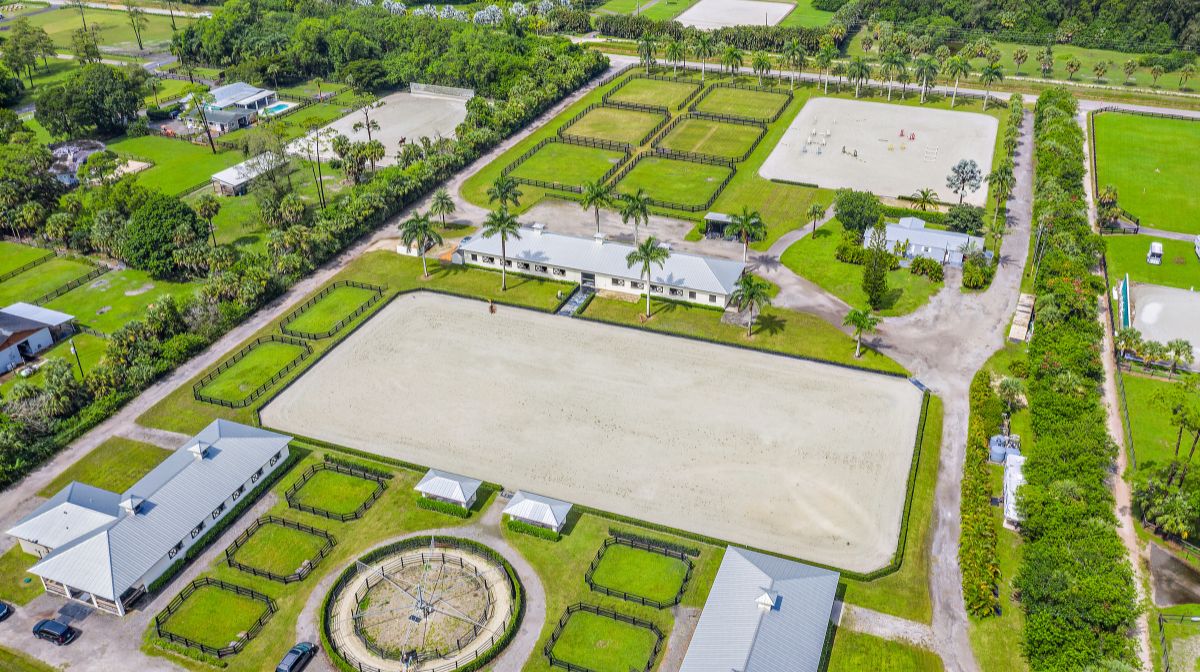
Most buyers who call about a horse property start the conversation the same way. They mention Wellington, because Wellington is the name everyone knows. They have watched the Winter Equestrian Festival, read about world-class dressage and high-goal polo, and heard that South Florida is where serious riders spend the season. What surprises many of them is how much of Palm Beach County horse country sits north and east of Wellington, closer to Jupiter, Palm Beach Gardens, and the coastline that brought them to the area in the first place.
Why Wellington Anchors the Conversation
Wellington earns its reputation. It hosts the Winter Equestrian Festival and the Global Dressage Festival at Wellington International, along with high-goal polo that draws players and spectators from around the world. During season, the volume of activity concentrated in a few square miles is genuinely unmatched in North America. The 2025 Winter Equestrian Festival alone produced an estimated economic impact of roughly 538 million dollars, a figure that reflects how many horses, trainers, grooms, and owners move through the area each winter.
Within Wellington and its immediate orbit sit enclaves built around that circuit, including Palm Beach Point, Saddle Trail Park, Grand Prix Village, Paddock Park, and Rustic Ranches, where proximity to the show grounds is the entire point. For a rider who competes several days a week from January through April, living inside that footprint makes sense.
For a great many buyers, though, daily circuit access is not the priority. They want to keep horses at home, ride from their own barn, and still reach the beach, the office, or the airport without a long drive south. One quieter difference shows up in the ownership records. The communities to the north are overwhelmingly full-time neighborhoods where people live year-round, not seasonal bases tied to a show calendar. That is where the communities covered below come in.
What Equestrian-Friendly Actually Requires
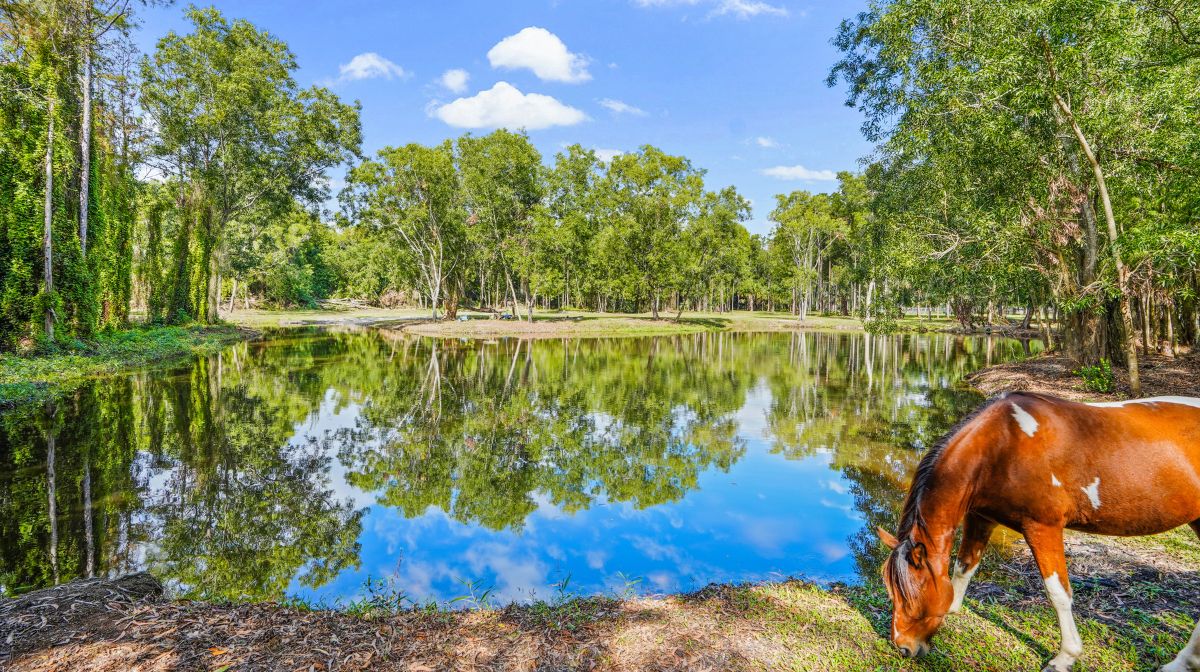
One point is worth understanding before touring anything. A listing that mentions horses does not guarantee you can keep them. Whether a parcel can support horses depends on its zoning, its land-use tier, and whether it sits inside a planned development with its own restrictions. Palm Beach County allows livestock as an accessory use to a single-family home in its rural and exurban tiers under specific conditions, while standard residential districts prohibit farm animals. Incorporated towns such as Loxahatchee Groves apply their own land development code on top of the county framework.
The practical takeaway is that two properties on the same road can carry different rights, and the answer lives in the parcel zoning and tier rather than the listing description. Verifying that early saves buyers from falling for a home that cannot legally do what they bought it to do. Good local agents check this before the showing, not after the contract.
Caloosa
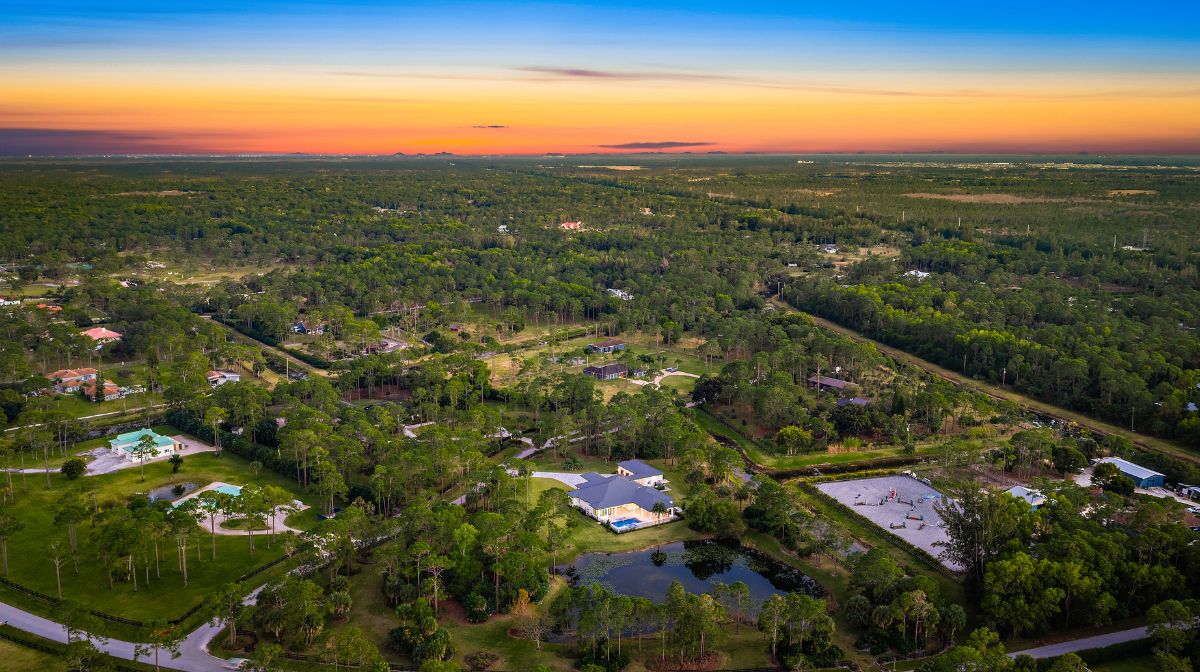
Caloosa is usually the first community that comes up once the conversation moves north of Wellington. Located in western Palm Beach Gardens, it was platted at roughly 350 homesites, each set on a minimum of five acres, spread across nearly 1,900 acres. The five-acre standard is not a marketing round number. The parcels cluster tightly at almost exactly five acres, giving the community an unusually consistent, open feel from one street to the next. At its center is a 32-acre horse park with riding rings, a jump course, and a cross-country course, connected to homes by more than thirty miles of interior bridle trails. Dozens of parcels carry agricultural classifications tied to horse and grove operations, a sign that this is a genuinely working horse community rather than a subdivision that simply allows animals.
Caloosa is commonly described as part of Palm Beach Gardens, but it sits in unincorporated northern Palm Beach County rather than inside the city limits, a distinction that shapes which rules and services apply. The neighborhood is largely built out, with only a couple dozen vacant lots available and homes that commonly run near 2,900 heated square feet or larger, most with pools. Positioned along State Road 710 a few miles north of PGA Boulevard, it keeps shopping, dining, and the beaches roughly twenty to twenty-five minutes away, with a general aviation airport close by for buyers who fly private.
Palm Beach Country Estates and Horseshoe Acres
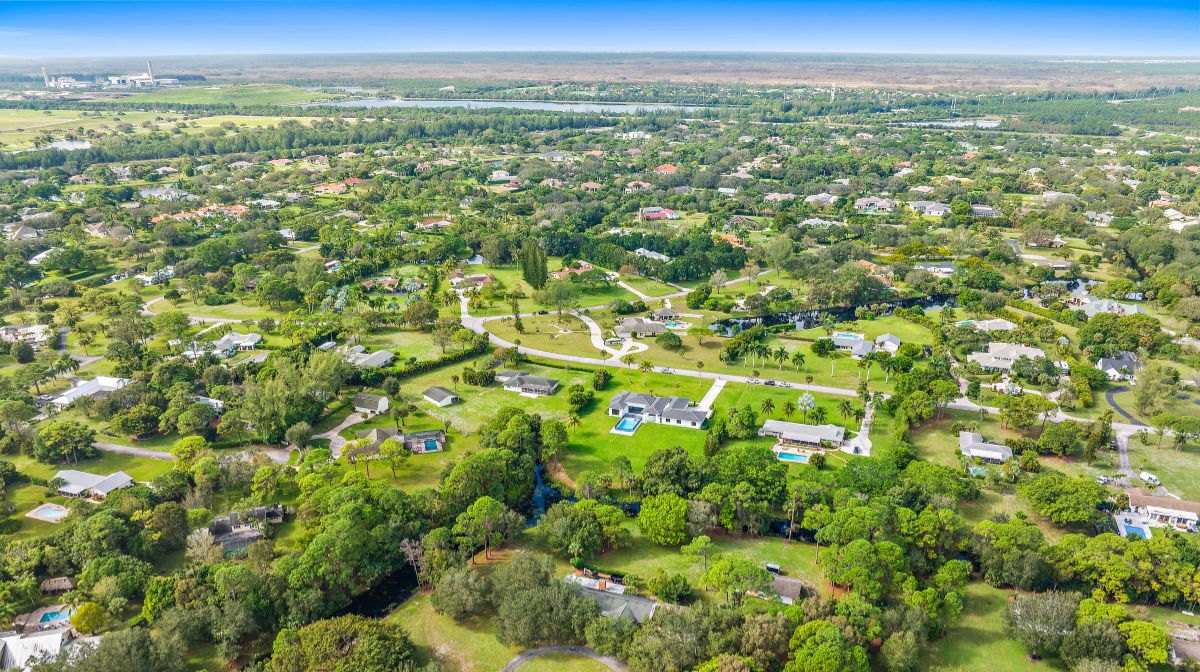
Buyers who want horse-keeping with the shortest possible drive to the coast often look at Palm Beach Country Estates. Set just west of the Florida Turnpike near Abacoa in the Jupiter and Palm Beach Gardens area, it spreads across roughly 3,200 acres of homesites that run just over an acre, with most parcels falling between about 1.15 and 1.3 acres and no homeowners association governing design. It is also the most full-time of these communities, with roughly nine in ten homes owner-occupied. That freedom draws a mix of owners. Some build full equestrian facilities and ride the community trails, while others simply want room for a workshop, a boat, or a guest house. Its location places beaches, I-95, and top-rated schools within a short drive, and it is still seeing steady new construction, which makes it one of the most coast-convenient acreage options in the northern county.
Nearby, Horseshoe Acres offers a gated alternative for buyers who prefer controlled access. It holds close to 382 homes on one-to-three-acre lots in Palm Beach Gardens, with 24-hour gated security, horse trails, horse-friendly zoning, and a low annual association fee. The homes here run notably larger, with a typical footprint near 3,500 heated square feet and pools on roughly nine in ten properties. Essentially none of its parcels carry an agricultural classification, so this is residential equestrian living behind a gate rather than working farmland. For buyers who like the idea of acreage and horses but still want a gate and defined community boundaries, it fills a niche that the larger, more open areas do not.
Jupiter Farms
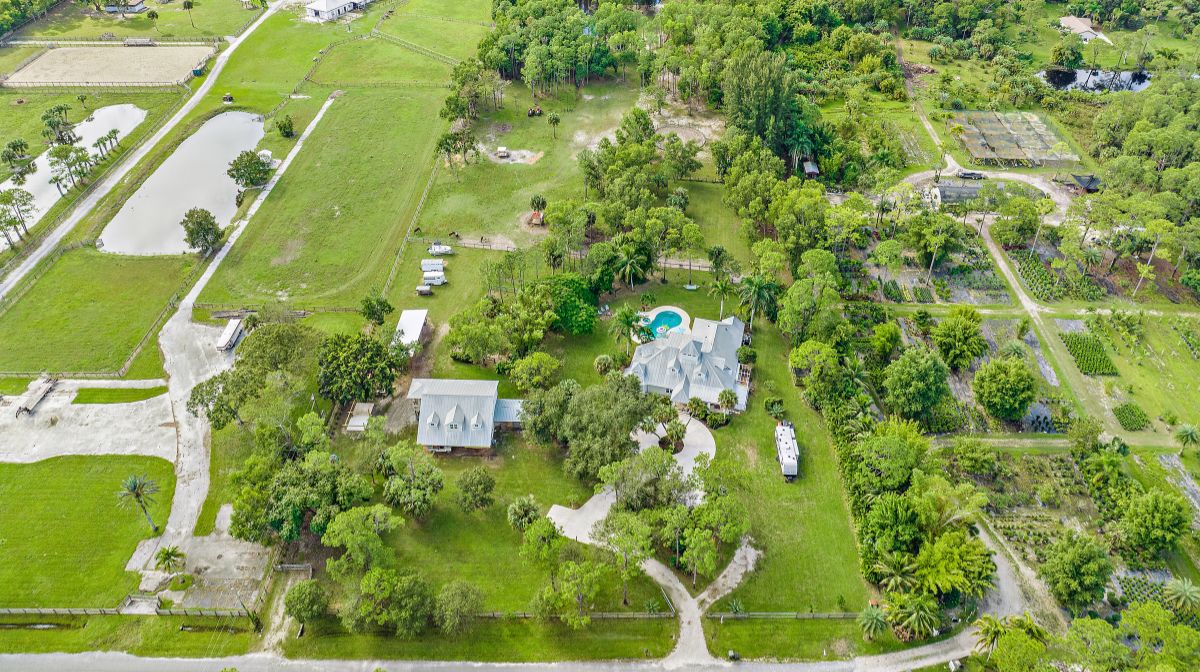
If Caloosa is the polished five-acre community, Jupiter Farms is the sprawling rural one. Stretching across more than fifteen square miles west of the Turnpike along Indiantown Road, it carries a Jupiter identity and mailing address while sitting in unincorporated Palm Beach County under the county rural land-use framework rather than the Town of Jupiter. Its patchwork reputation is well earned. Single-family lots run from about an acre to nearly twenty, with no single dominant size, and the county plan for the area now uses a Rural Residential designation in which newly created lots must reach ten acres, though many smaller parcels created under earlier patterns remain and are treated as legal nonconforming.
That history gives Jupiter Farms its varied character, with a mix of parcel sizes, a blend of paved and unpaved roads, and horses that hold the right of way across much of the area. Homes tend to be more modest than in the gated communities, near 2,000 heated square feet with pools on about half the properties, which keeps the area comparatively attainable. It is also the most active of these communities for new construction, with more than two hundred homes being built since 2015 and the largest inventory of vacant residential lots among the neighborhoods here, so buyers who want to build still have room. Jupiter Farms Park adds a public equestrian facility with sand, grass, and warm-up arenas, and within the larger area, gated Ranch Colony offers a more structured take on the same lifestyle, with subdivisions ranging from multi-acre equestrian ranches to a golf enclave and a private airpark. Jupiter beaches sit roughly fifteen minutes east, with the reminder that horse rights depend on each parcel zoning and tier.
The Acreage
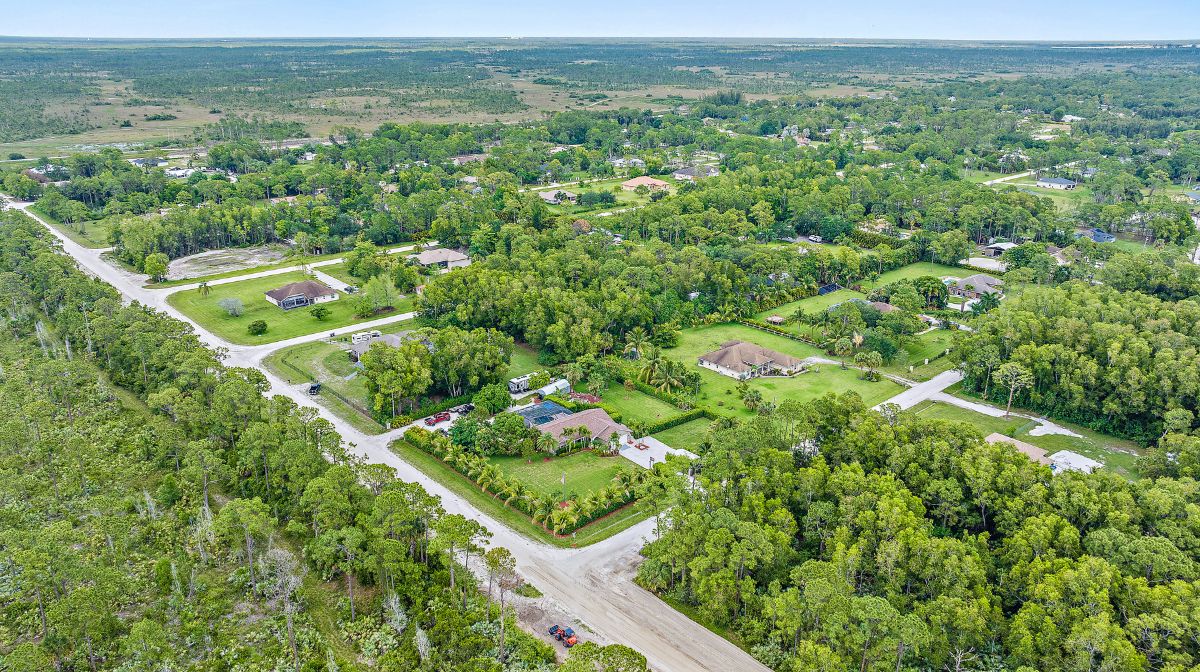
Farther west and inland, The Acreage is the largest of these areas by a wide margin and one of the more accessible entry points into acreage living. With more than 10,000 properties across its territory, it operates on a completely different scale from the other communities here. It is unincorporated, served not by a city but by the Indian Trail Improvement District, an independent special district that maintains more than 450 miles of roads, over 160 miles of canals, and nine rural and equestrian parks. Homesites commonly start around an acre and a quarter and run much larger, and horse-friendly zoning is the norm rather than the exception.
Riders here benefit from an extensive network of marked horse trails maintained by the local landowners association, along with facilities such as Nicole Hornstein Equestrian Park and nearby conservation lands like the J.W. Corbett area, which connect to longer regional trails. The Acreage rewards buyers who want maximum land and riding access and are comfortable trading a longer drive to the coast for it.
Loxahatchee Groves and the Naming Confusion
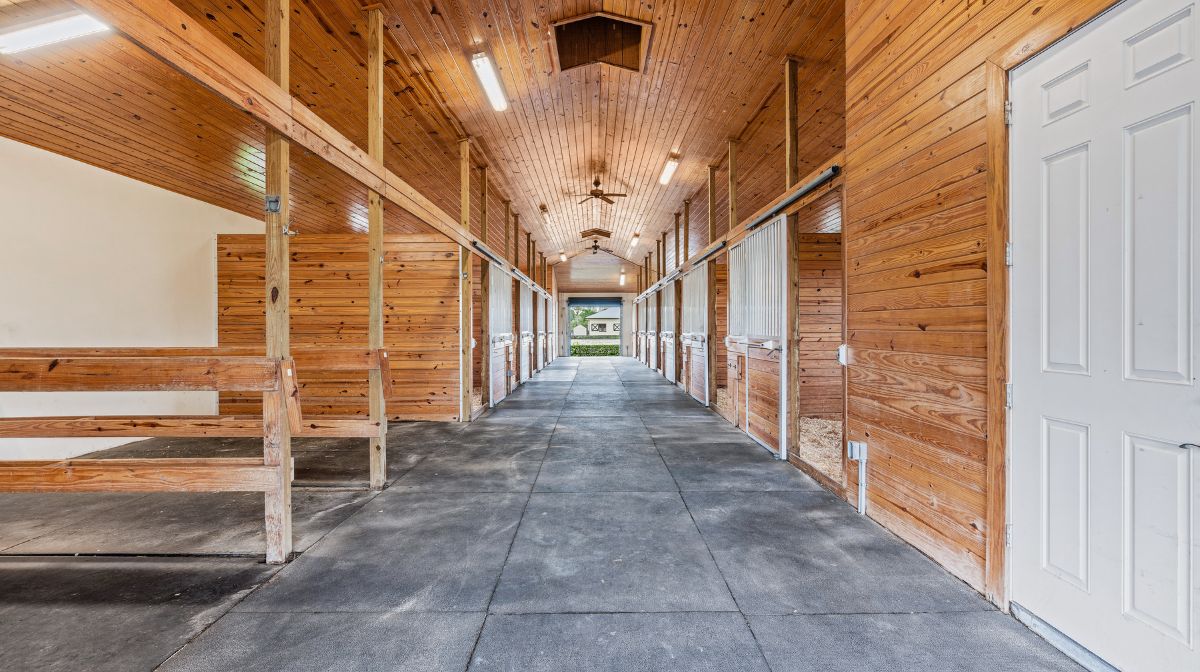
The name Loxahatchee causes more confusion than any other in this part of the county, and it is worth sorting out before you read too far into a listing. The Town of Loxahatchee Groves is an incorporated municipality, established in 2006 as Palm Beach County thirty-eighth, with its own council, its own land development code, and an agricultural-residential zoning district that sets a five-acre minimum lot size. It bills itself as Florida Last Frontier and has worked deliberately to stay that way, keeping a dense tree canopy, resisting streetlights and sewers, and preserving the unpaved roads that longtime landowners consider part of the appeal.
Loxahatchee Groves stands apart from everything else covered here. Its single-family lots are the largest of the group, with a median around two and a half acres and many parcels running to five, ten, or more. It is also the most genuinely agricultural place in this comparison. Parcels carrying farm classifications, including grazing land, livestock, groves, and nurseries, approach the number of single-family homes, a ratio nothing else in the northern county comes close to. Homes tend to be older and smaller, and only about a quarter have pools, which fits a place where the land, not the house, is the point.
The broader area many people simply call Loxahatchee, including much of what is marketed as The Acreage, lies outside the town in unincorporated county territory under different rules. Because the town and the surrounding area share a name and a rural feel, buyers routinely assume a parcel falls under one when it actually falls under the other. Confirming whether a property sits inside the Town of Loxahatchee Groves or in unincorporated Palm Beach County tells you which permitting process, which zoning code, and which set of allowances applies to your barn, arena, or fence.
Room to Go North
Buyers willing to cross into Martin County find their own equestrian pockets, particularly around Palm City, where larger inland acreage and a quieter pace attract horse owners who want room to spread out while staying within reach of Stuart and the coast. For some buyers, that northern option opens up land and privacy that are harder to find closer in, which is why a serious search often looks across the county line rather than stopping at it.
Choosing Among Them
Taken together, these communities form a spectrum rather than a set of interchangeable options. Horseshoe Acres sits at the residential end, gated and pool-heavy with no working farmland behind the entrance. Palm Beach Country Estates offers roughly one-acre homesites, the highest share of full-time owners, and the shortest drive to the coast. Caloosa holds the classic five-acre trail-community model, established, consistent, and largely built out. Jupiter Farms is the sprawling, ever-changing middle, with the widest range of parcel sizes and the most land available to build. Loxahatchee Groves anchors the rural end, with the largest lots and by far the most active agricultural land.
So the choice comes down to how you weigh three things: proximity to the Wellington circuit, the amount of land and working-rural character you want, and how close you need to be to the coast and northern-county conveniences. A competitive rider who shows through the winter season may still be happiest inside Wellington footprint. A buyer who keeps horses for pleasure, values acreage and quiet, and wants Jupiter or Palm Beach Gardens nearby will often find a better fit in one of the communities to the north. Getting those details straight before you fall for a specific home is what separates a smooth purchase from an expensive surprise.
Waterfront Properties has spent decades helping buyers navigate the distinct communities of Palm Beach, Martin, and St. Lucie counties, including the acreage and equestrian neighborhoods that rarely reveal their differences online. If you are ready to find a property that fits your horses, your routine, and the way you actually want to live, contact Waterfront Properties to start a more informed, focused search.
Frequently Asked Questions
What equestrian communities are near the coast in Palm Beach County besides Wellington?
The main options covered here are Caloosa, Palm Beach Country Estates, Horseshoe Acres, Jupiter Farms, The Acreage, and Loxahatchee Groves, all in the northern part of the county closer to Jupiter and Palm Beach Gardens. Buyers willing to cross the county line also find equestrian pockets in Martin County, particularly around Palm City.
If a listing mentions horses, does that mean I can keep them on the property?
Not necessarily. Whether a parcel can support horses depends on its zoning, its land-use tier, and whether it sits inside a planned development with its own restrictions. Palm Beach County allows livestock as an accessory use to a single-family home in its rural and exurban tiers under specific conditions, while standard residential districts prohibit farm animals. Two properties on the same road can carry different rights, so it is worth verifying the parcel zoning and tier before you buy.
Is Caloosa part of Palm Beach Gardens?
Caloosa is commonly described as part of Palm Beach Gardens, but it actually sits in unincorporated northern Palm Beach County rather than inside the city limits, a distinction that shapes which rules and services apply. It is located along State Road 710 a few miles north of PGA Boulevard, which keeps shopping, dining, and the beaches roughly twenty to twenty-five minutes away.
How big are the lots in Caloosa, and what equestrian facilities does it have?
Caloosa was platted at roughly 350 homesites, each set on a minimum of five acres, across nearly 1,900 acres, and the parcels cluster tightly at almost exactly five acres. At its center is a 32-acre horse park with riding rings, a jump course, and a cross-country course, connected to homes by more than thirty miles of interior bridle trails.
What is the difference between Loxahatchee and Loxahatchee Groves?
The Town of Loxahatchee Groves is an incorporated municipality, established in 2006, with its own council, its own land development code, and an agricultural-residential zoning district that sets a five-acre minimum lot size. The broader area many people simply call Loxahatchee, including much of what is marketed as The Acreage, lies outside the town in unincorporated county territory under different rules. Confirming which one a property sits in tells you which permitting process and zoning code apply to a barn, arena, or fence.
How big is The Acreage?
The Acreage is the largest of these areas by a wide margin, with more than 10,000 properties, which puts it on a completely different scale from the other communities. It is unincorporated and served by the Indian Trail Improvement District, which maintains more than 450 miles of roads, over 160 miles of canals, and nine rural and equestrian parks. Homesites commonly start around an acre and a quarter and run much larger.
What are the lot sizes in Jupiter Farms?
Single-family lots in Jupiter Farms run from about an acre to nearly twenty, with no single dominant size. The county plan now uses a Rural Residential designation in which newly created lots must reach ten acres, though many smaller parcels created under earlier patterns remain and are treated as legal nonconforming. The area also has a public equestrian facility at Jupiter Farms Park with sand, grass, and warm-up arenas.
Is Horseshoe Acres a gated community?
Yes. Horseshoe Acres is a gated community of close to 382 homes on one-to-three-acre lots in Palm Beach Gardens, with 24-hour gated security, horse trails, and horse-friendly zoning. Its homes tend to run larger, near 3,500 heated square feet, and essentially none of its parcels carry an agricultural classification, making it residential equestrian living behind a gate rather than working farmland.
Which of these communities is closest to the coast?
Palm Beach Country Estates offers the shortest drive to the coast. Set just west of the Florida Turnpike near Abacoa in the Jupiter and Palm Beach Gardens area, it places beaches, I-95, and top-rated schools within a short drive, which makes it one of the most coast-convenient acreage options in the northern county.
Are there equestrian communities in Martin County?
Yes. Buyers willing to cross into Martin County find equestrian pockets particularly around Palm City, where larger inland acreage and a quieter pace attract horse owners who want room to spread out while staying within reach of Stuart and the coast.
Leave A Comment