

Where to Buy if You Want a Golf Cart Lifestyle in the Northern Palm Beaches

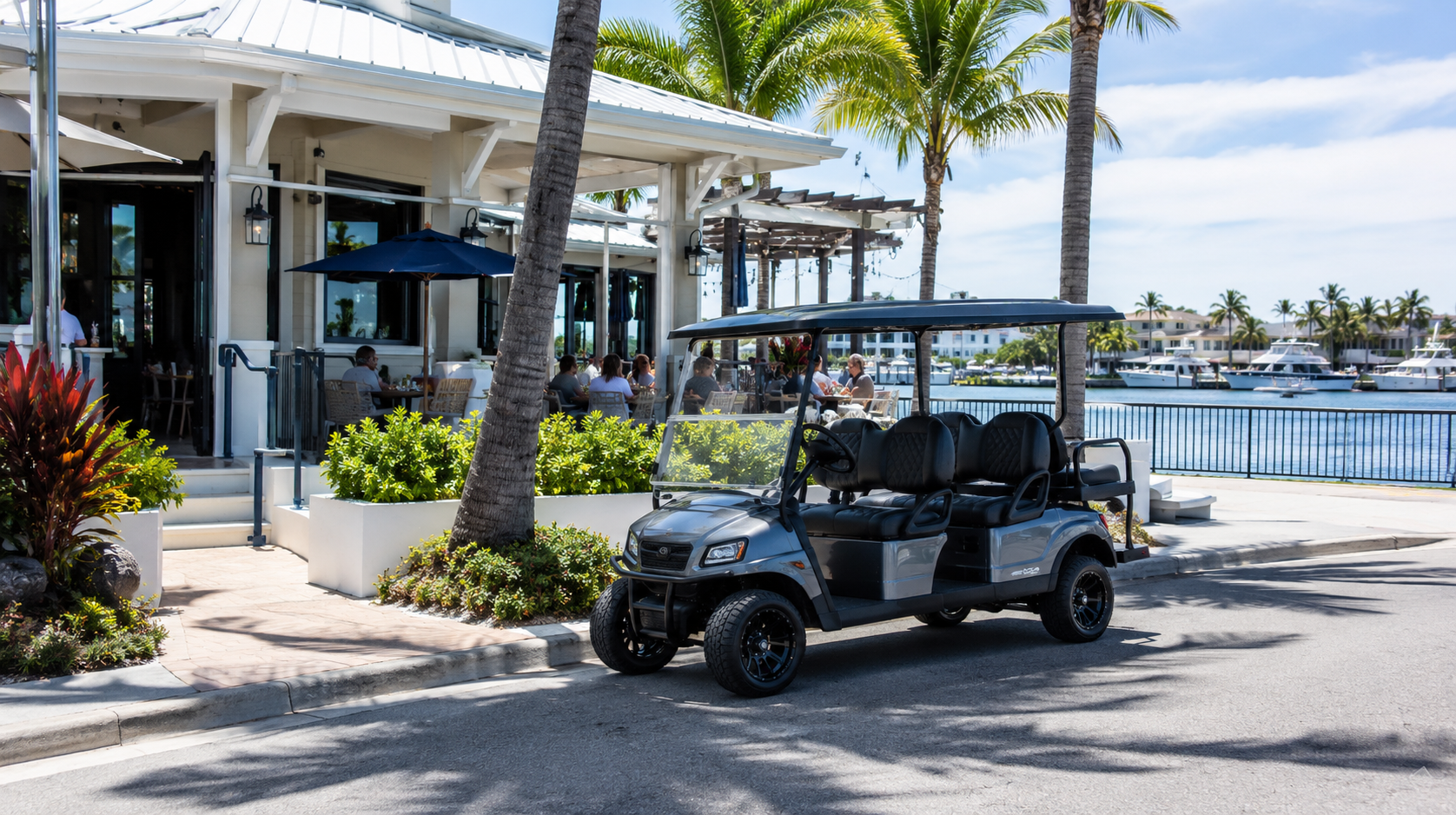
“Golf cart lifestyle” is one of those phrases that sounds simple until you start shopping for a home around it. For one buyer it means rolling down to the beach at sunrise, parking outside a café, and never touching the car on a Saturday. For another it means a quiet path inside a gated club, where the cart lives in the garage next to the golf bag and rarely leaves the property. In the northern Palm Beaches, both versions exist, but they live in very different places, and the address you choose largely decides which one you get.
It helps to understand that distinction before browsing listings, because Florida draws a firm legal line between a cart you can drive around town and one you can only drive inside a community.
Two Different Versions of the Same Dream
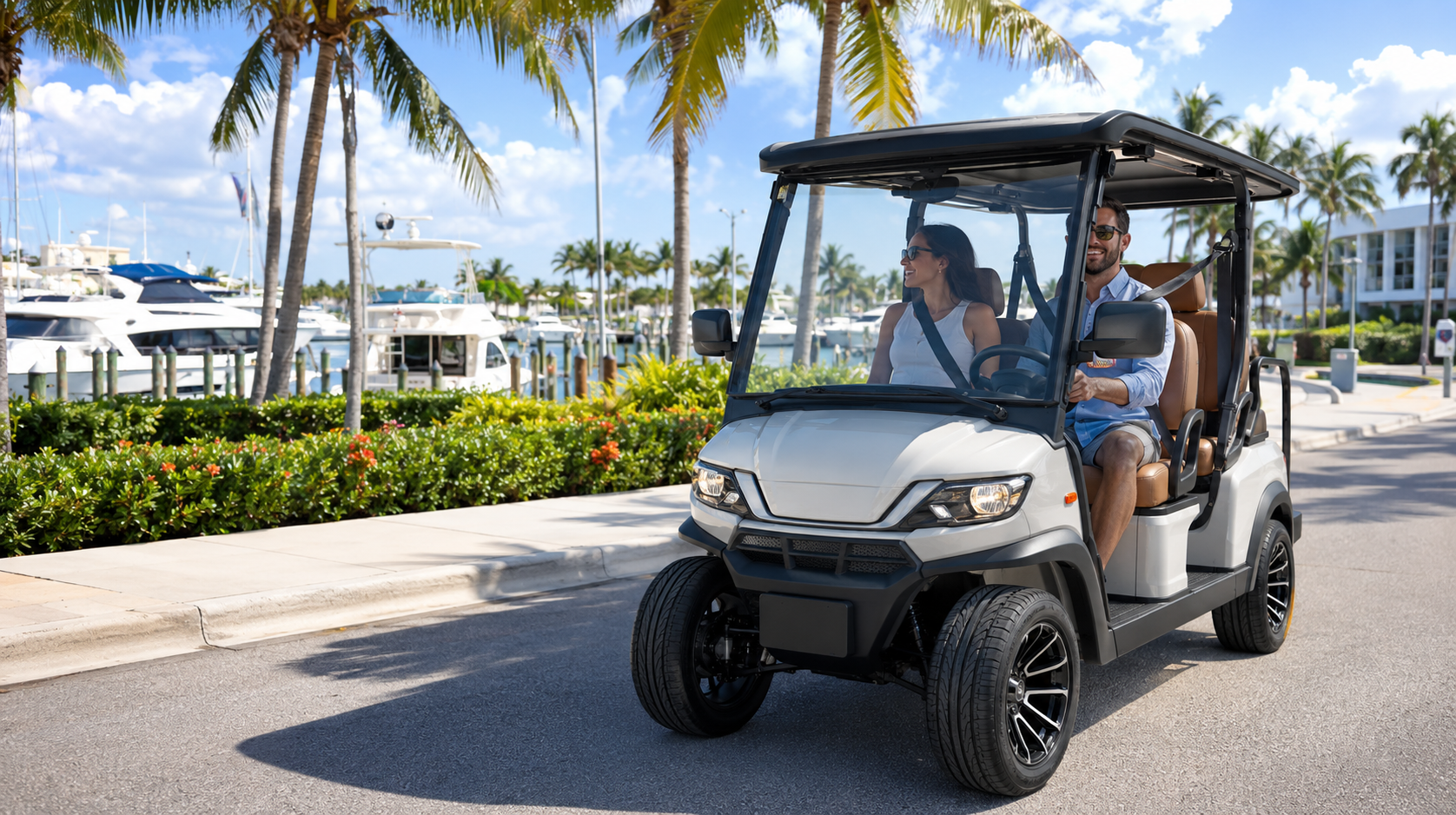
The first version is the cart as everyday transportation. You want to leave the house, turn onto a public street, and run a normal errand (the beach, coffee, dinner, the marina) without a car. This only works in towns that have specifically decided to allow it, and only on the streets they have approved.
The second version is the cart as a community amenity. Inside a gated golf or country-club community, residents move between the clubhouse, the courts, the pool, and one another’s homes on private roads. The cart is part of daily life, but it generally stays behind the gate. Many buyers assume the two are interchangeable. They are not, and the difference comes down to who owns the road and what the law says about it.
What Florida Actually Allows (and Why the Street Matters)
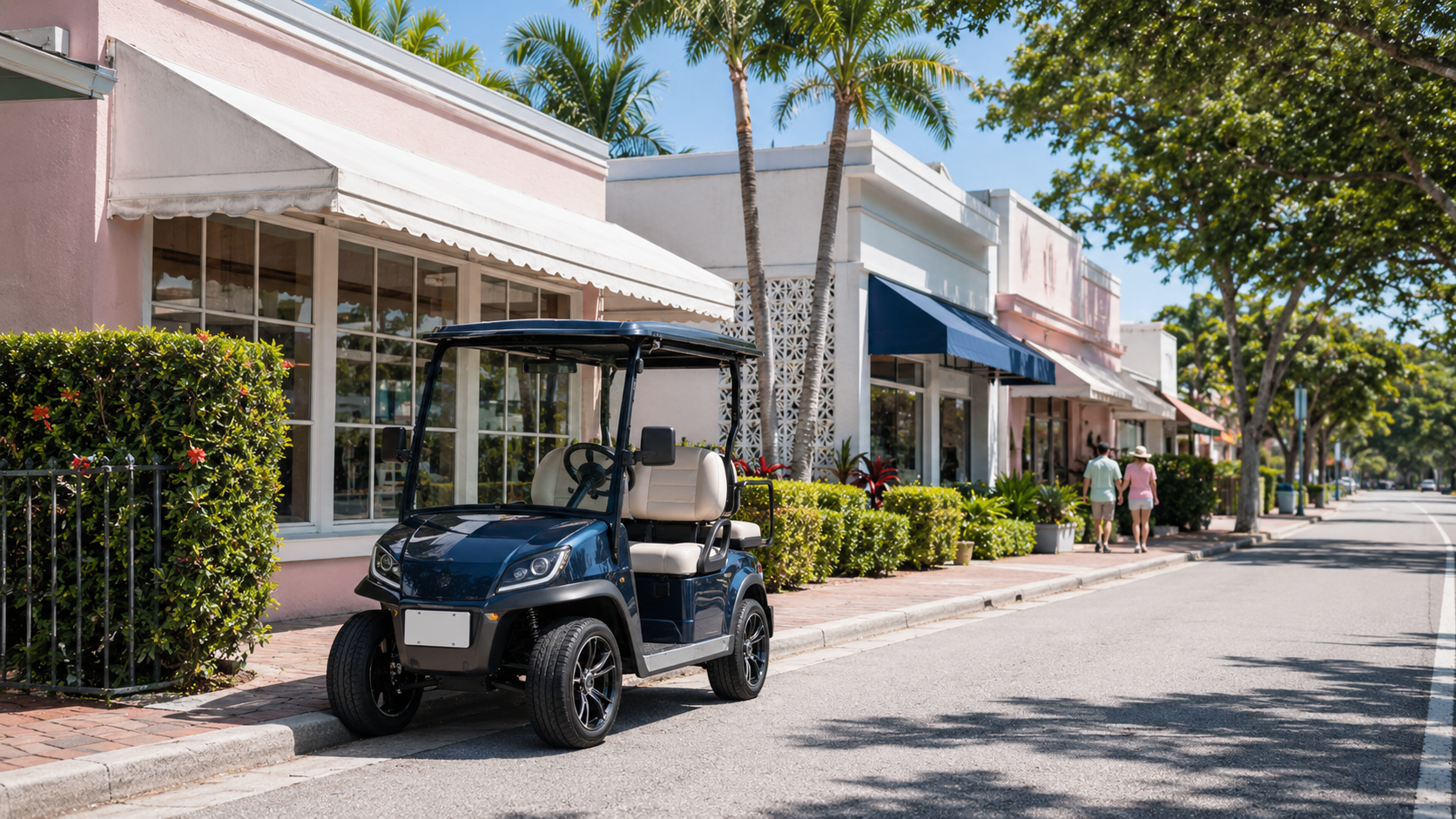
Florida recognizes two kinds of vehicles that look almost identical. A standard golf cart is built to travel no faster than 20 mph. A low-speed vehicle, or LSV, sometimes called a street-legal cart, can reach 25 mph and is treated much more like a car. It must be registered, titled, and insured, and the driver must hold a valid license.
The practical difference is where each can go. A standard golf cart may only be driven on a public road if the local government has formally designated that road for golf carts, usually after a traffic study and with posted signage. An LSV, by contrast, can generally be driven on any public road with a speed limit of 35 mph or less, regardless of a special designation. There are also operator rules worth knowing: under current Florida law, anyone under 18 needs a learner’s permit or driver’s license and must carry it with them to operate a cart on public roads, and anyone 18 or older must carry a government-issued photo ID.
None of this applies inside a private gated community, where the roads are private and the homeowners association sets the rules. That is why a buyer can legally drive a basic cart all day inside a place like Admirals Cove, but the same cart cannot legally roll out the front gate onto a public road unless that route has been designated for carts or the cart has been converted to an LSV. Local ordinances change over time, so any buyer planning to rely on a cart for transportation should confirm the current rules with the specific town before committing. This is general information, not legal advice.
Towns Where You Can Actually Drive the Cart Around
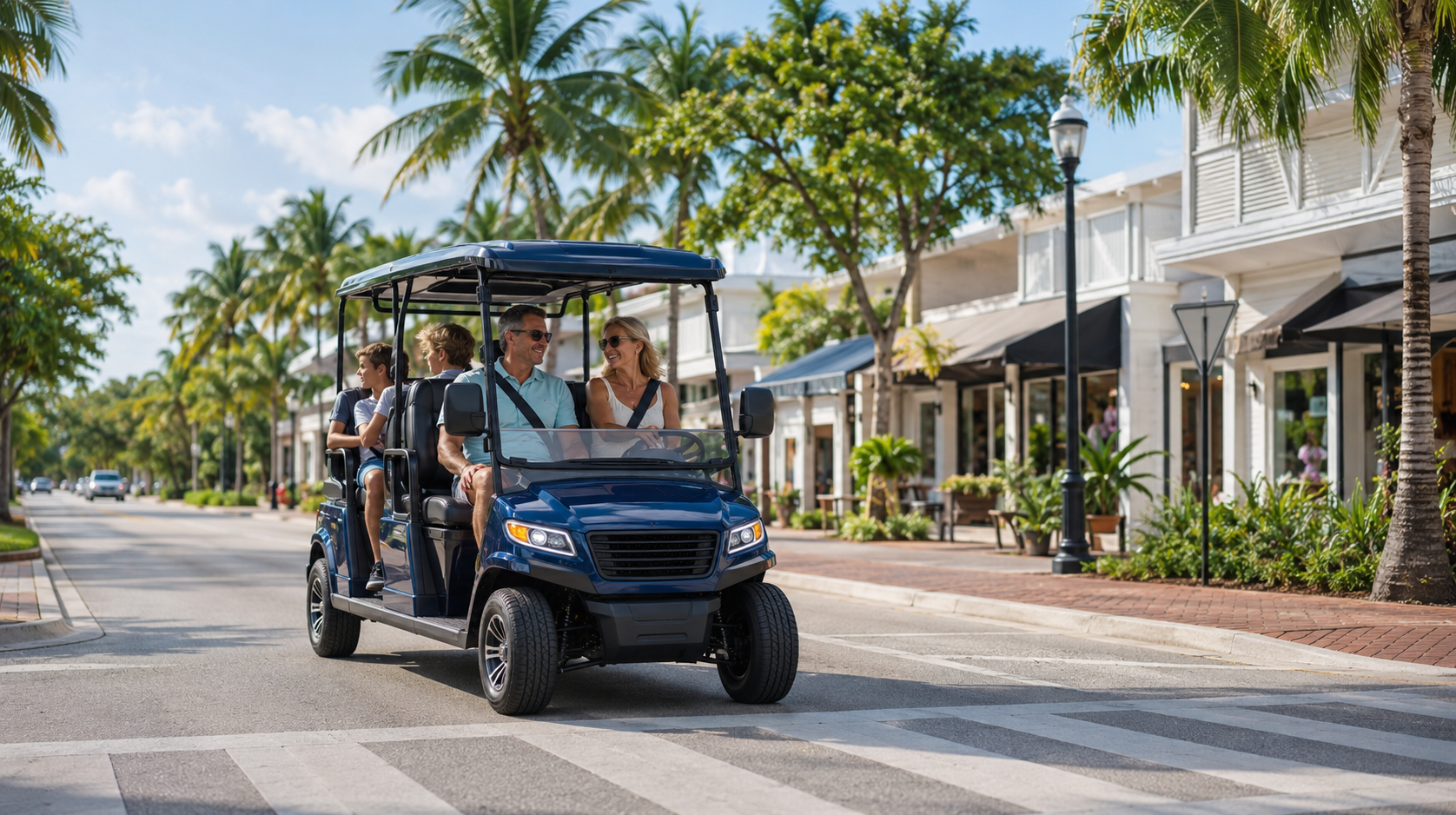
A handful of northern Palm Beach communities have built the everyday-cart lifestyle into their local rules, and these are the places to look if street access matters most.
North Palm Beach is one of the clearest examples. The Village Council adopted an ordinance allowing golf carts on Village-owned streets, which means residents can legally run much of their daily routine by cart within the Village. The ordinance does not extend to the major roads the Village does not own, including Northlake Boulevard, U.S. 1, Alternate A1A, and Prosperity Farms Road. The practical map matters, so it is worth understanding which streets connect before settling on a neighborhood.
Tequesta has taken a similar step, designating certain village streets for golf cart use and posting signage on the approved roads. For buyers drawn to Tequesta’s quieter, village feel just north of Jupiter, the cart becomes a natural extension of that pace.
Just over the county line in Martin County, the Town of Jupiter Island is a registered golf cart community, meaning standard carts are permitted on town roads. It sits outside Palm Beach County, but for buyers weighing the full stretch of coast from Jupiter north, it belongs in the same conversation.
Inside the Gates: Golf and Country-Club Communities
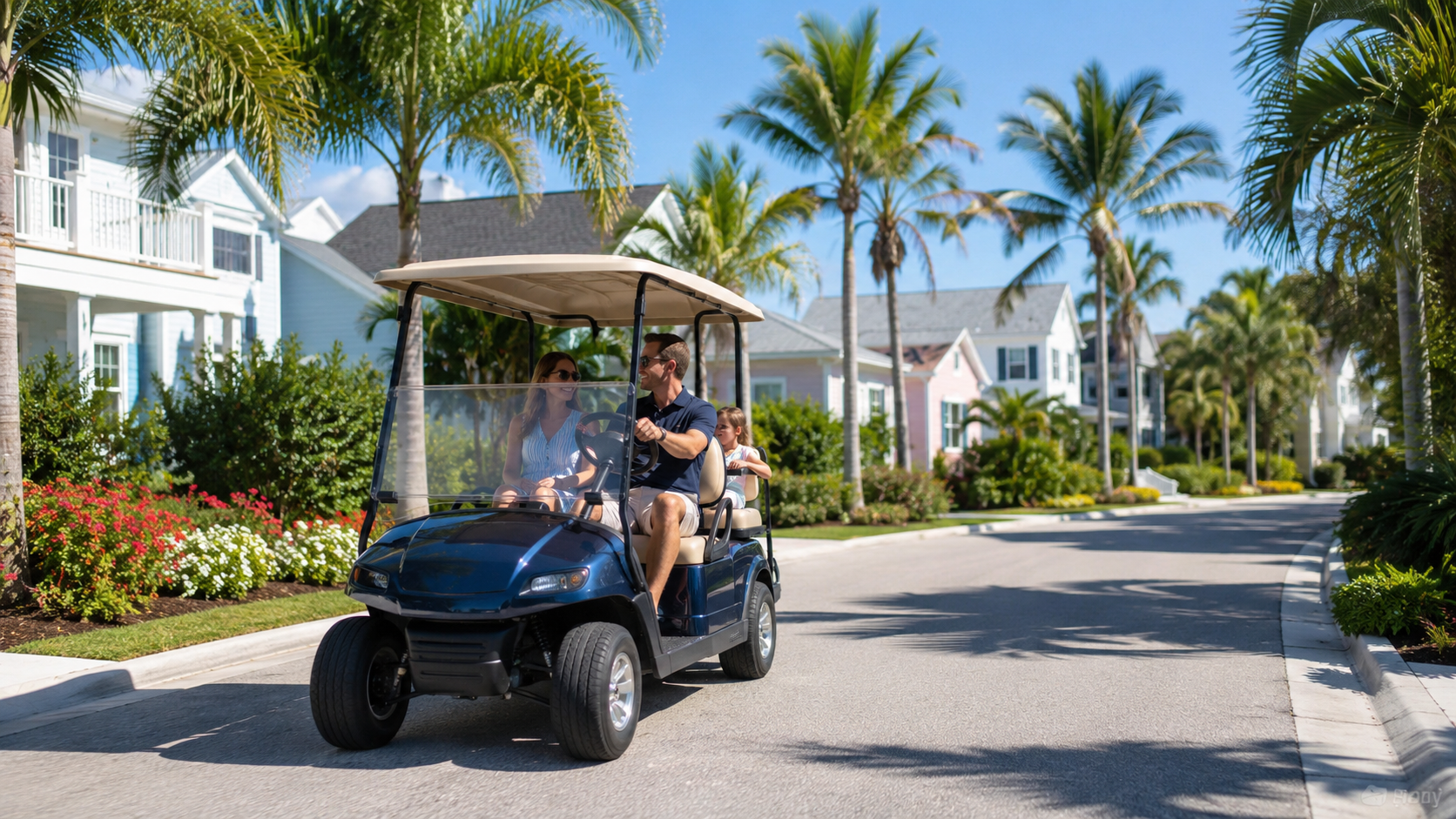
For buyers whose idea of the golf cart lifestyle centers on the club rather than the town, the northern Palm Beaches are unusually deep. Gated communities such as Admirals Cove and Jonathan’s Landing in Jupiter, and Frenchman’s Creek, Frenchman’s Reserve, BallenIsles, PGA National, Old Palm, and Mirasol in Palm Beach Gardens, are built around private roads where carts move freely between homes, the clubhouse, courses, and amenities.
Here the lifestyle is essentially guaranteed by the community itself rather than by a municipal ordinance, because the roads are private. The trade-off is that the cart generally stays inside the gate. A resident who also wants to take a cart to a public beach or an off-site restaurant would need to look at whether that route is street-legal, which usually means owning an LSV rather than a standard cart. For many club residents that is no limitation at all, since the cart was always meant for the community, not the open road.
The Question Buyers Forget to Ask
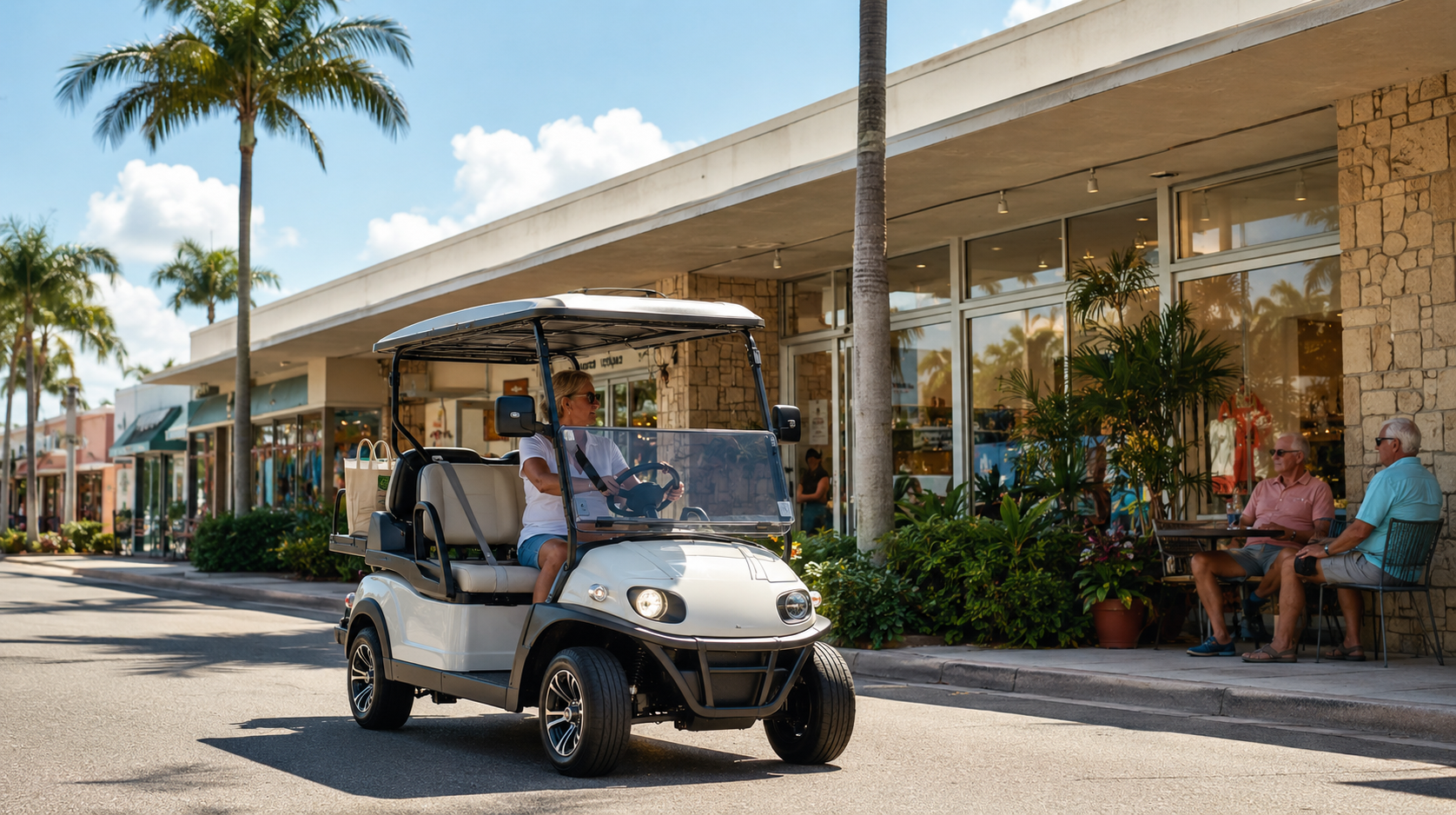
The most common misstep is assuming a cart-friendly reputation translates to a cart-friendly address. Two homes a few blocks apart can sit on opposite sides of a designation line, with one on a Village-owned street where carts are welcome and the other on a county or state road where they are not. A community may allow carts internally while offering no legal way to drive one to the beach. An LSV opens up far more of the map than a standard cart, which changes what is realistic from a given home.
The Town of Jupiter is a useful illustration. Master-planned, walkable areas like Abacoa, with a town center, restaurants, and short distances between things, make it easy to assume a cart belongs to the lifestyle. Yet the town has not adopted an ordinance designating its roads for golf carts, and under Florida’s default rule that means a standard cart is not street-legal on Jupiter’s public roads. The practical workaround is an LSV, which may be driven on roads posted at 35 mph or less regardless of local designation. A buyer picturing a basic cart trip to the beach would otherwise be planning around a route that does not legally exist.
These are exactly the distinctions that rarely show up in a listing. A property can be marketed as being in a golf cart community without making clear whether that means the town, the gate, or simply a neighbor who happens to drive one. Sorting out which version applies to a specific address, and whether it matches how you actually intend to live, is local knowledge, not listing-photo knowledge.
The Bottom Line
The northern Palm Beaches genuinely deliver the golf cart lifestyle, but in more than one form. Some buyers want the freedom of a town built to let them leave the car at home; others want the easy rhythm of a private club where the cart is part of the membership. Knowing which one you are after, and which towns and communities are set up to provide it, turns a vague wish into a focused search.
Waterfront Properties has spent decades helping buyers understand the real differences between communities across Palm Beach, Martin, and St. Lucie counties, from cart-friendly beach towns to private golf and country-club communities. If a golf cart lifestyle is part of what you are looking for, click here to get in touch and start a more informed, focused search.
Frequently Asked Questions
Can you drive a golf cart on public streets in the Town of Jupiter, Florida?
Not with a standard golf cart. The Town of Jupiter has not adopted an ordinance designating its roads for golf carts, and under Florida law a standard cart can only be driven on public roads that a local government has specifically approved. The legal way to use a cart on Jupiter’s public roads is a low-speed vehicle, which may operate on roads posted at 35 mph or less. Inside private gated communities, the community’s own rules apply instead.
What is the difference between a golf cart and a low-speed vehicle (LSV)?
A standard golf cart is built to travel no faster than 20 mph and may only be driven on public roads a local government has designated for carts. A low-speed vehicle, sometimes called a street-legal cart, can reach 25 mph and is treated much more like a car. It must be registered, titled, and insured, the driver must hold a valid license, and it can generally be driven on public roads posted at 35 mph or less without any special local designation.
Which towns in the northern Palm Beaches allow golf carts on their streets?
North Palm Beach permits golf carts on Village-owned streets, though not on the major roads the Village does not control, such as Northlake Boulevard, U.S. 1, Alternate A1A, and Prosperity Farms Road. Tequesta allows carts on certain designated village streets with posted signage. Just over the county line in Martin County, the Town of Jupiter Island is a registered golf cart community where standard carts are permitted on town roads. These rules are set at the town level and can change, so it is worth confirming the current designations before buying.
Do you need a license, insurance, or a minimum age to drive a golf cart in Florida?
For a standard golf cart on public roads, anyone under 18 needs a learner’s permit or driver’s license and must carry it, and anyone 18 or older must carry a government-issued photo ID. A low-speed vehicle carries more requirements because it is treated like a car. It must be registered, titled, and insured, and the driver must hold a valid license. This is general information rather than legal advice, and the rules can change over time.
Can you drive a golf cart inside a gated golf community like Admirals Cove or PGA National?
Yes. Gated golf and country-club communities such as Admirals Cove and Jonathan’s Landing in Jupiter, and Frenchman’s Creek, Frenchman’s Reserve, BallenIsles, PGA National, Old Palm, and Mirasol in Palm Beach Gardens, are built around private roads where carts move freely between homes, the clubhouse, and amenities. Because those roads are private, the community sets the rules. The cart generally stays inside the gate, since driving it out onto a public road usually requires converting it to a low-speed vehicle.
Leave A Comment