

Who Owns the Water? What Riparian Rights Mean for South Florida Waterfront Buyers

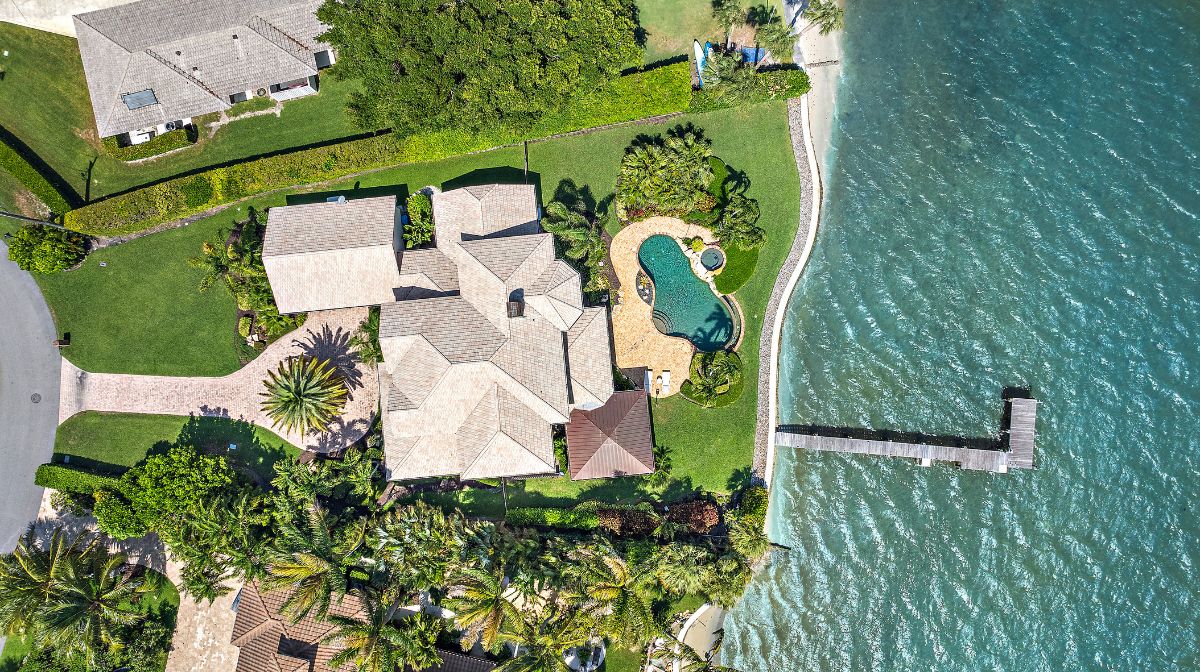
When buyers tour a waterfront home in Palm Beach, Martin, or St. Lucie County, attention naturally goes to what they can see: the dock, the view, the width of the water, the boat tied up out back. What they rarely think about is the layer of legal rights attached to all of it. Those rights have a name, riparian rights, and they are often the single most valuable thing a waterfront property conveys.
The term sounds technical, and the law behind it genuinely is, but the core ideas are not hard to understand. They matter to anyone deciding which waterfront property is actually worth buying. Here is what riparian rights are, what they include, and where their limits lie.
What “Riparian Rights” Actually Means
Riparian rights are the legal rights that come with owning land that borders navigable water. In plain terms, they are the rights to reach the water, use it, and benefit from being next to it. They exist because waterfront is limited and valuable, and Florida law has spent more than a century working out how to balance private waterfront use against the public’s interest in the water itself.
There is a technical distinction worth knowing. Strictly speaking, riparian rights belong to land along rivers and streams, while littoral rights belong to land along oceans and lakes. In South Florida, that would make a home on the St. Lucie River or the Loxahatchee a riparian property and an oceanfront home on the Atlantic a littoral one. In everyday conversation, though, and in most listings, deeds, and court cases, the word “riparian” is used as a catch-all for both. We use it that way here.
These Rights Come With the Land
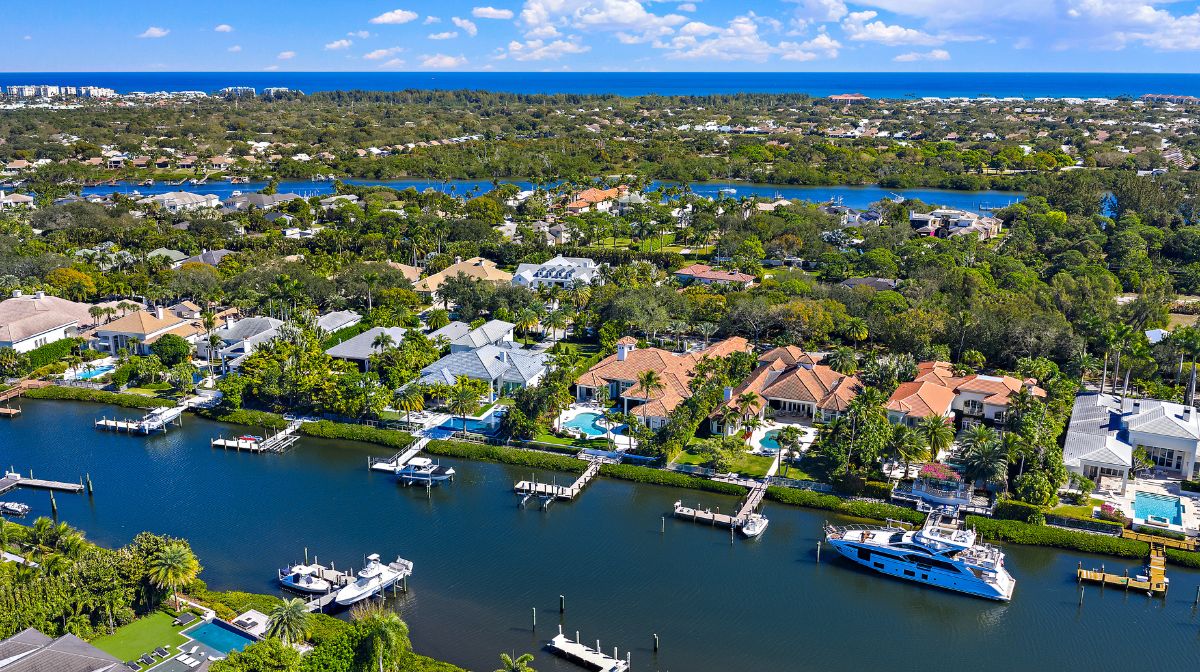
One of the most reassuring things about riparian rights is that you generally do not have to buy them separately or negotiate for them. Under Florida law, they are appurtenant to the property, meaning they belong to the land and transfer automatically when it is sold, whether or not the deed specifically mentions them.
There is a threshold to meet. To carry riparian rights, the property has to extend to the ordinary high water mark of a body of water that is legally navigable. Most genuine waterfront in this region, along the Intracoastal, the rivers, the lagoon, and navigable canals, clears that bar comfortably. It is not automatic in every case, though, which is one reason a survey and a look at the chain of title matter before closing. Occasionally a lot stops just short of the water, or a recorded easement gives a neighbor or community shared use of the riparian area, and what looks like full waterfront may not convey everything a buyer assumes.
What the Rights Actually Include
Riparian rights are best understood as a small bundle of related privileges. The most protected is the right of access, the right to get to and from the water without being blocked. Florida courts treat this near-shore right of ingress and egress as the most fundamental.
Closely tied to access is the right to build a dock or pier out to navigable water, often called the right to “wharf out.” This is what lets a homeowner keep a boat behind the house rather than at a marina, though it is exercised within a permitting system and within defined boundaries, as covered below.
Florida is also somewhat unusual in recognizing a right to an unobstructed view over the water, treated as part of what gives waterfront its value and protected within limits. There is also the right to accretion and reliction: when soil gradually builds up along the shoreline, or water slowly recedes to expose new land, that new ground generally belongs to the waterfront owner, provided the change is gradual rather than sudden. Beyond these, waterfront owners share in the rights the public enjoys on navigable water, such as navigation, boating, fishing, and swimming.
The Catch: You Do Not Own the Bottom
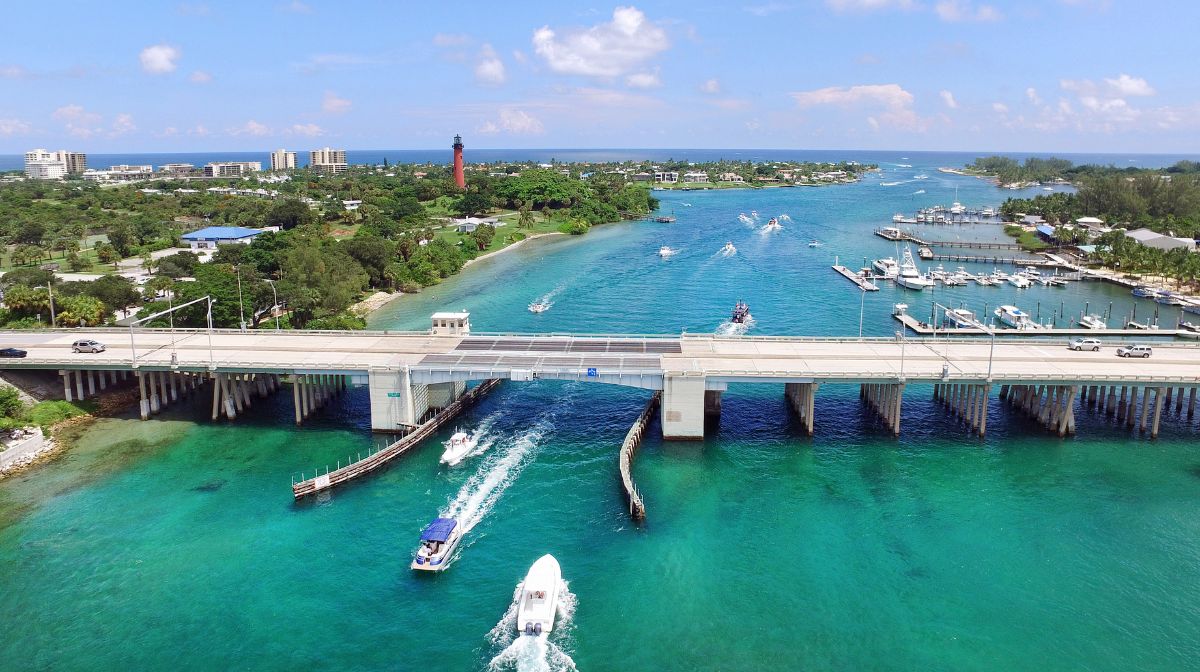
Here is where many new waterfront owners are surprised. The land beneath navigable water, the submerged bottom below the high water mark, is not yours. In Florida, the state holds title to those sovereign submerged lands in trust for the public. This public trust doctrine is the reason courts describe riparian rights as qualified rather than absolute.
In practice, your rights are real and protected, but they are exercised alongside the public’s interest and your neighbors’. You cannot block a navigable channel or use the water in a way that unreasonably interferes with the owners around you. The guiding principle is reasonable use: enjoy the water fully, but not at the expense of everyone else’s ability to do the same.
Why Your Property Line Does Not Shoot Straight Into the Water
This is the single most useful thing for a waterfront buyer to understand, because it is so often misunderstood. People naturally assume that their two side property lines simply continue straight out into the water, marking off a private slice of waterway in front of the home. It does not work that way. You do not own the submerged bottom, the state does, and your rights to use the water are shared with your neighbors rather than fixed to your lot lines. Florida courts have generally sorted out the resulting boundaries through a principle of equitable apportionment, drawing riparian lines that angle toward the navigation channel so that each owner gets fair access.
A recent appellate ruling from another part of Florida has called that approach into question (Geise v. Fleck), suggesting that many neighbor disputes turn less on drawing a fixed line and more on whether one owner's use unreasonably interferes with another's. It is not the settled law of the land for Palm Beach, Martin, and St. Lucie counties, but it is worth being aware of, since the framework may keep shifting. The practical lesson holds either way: your rights to view and reach the water are rights to a reasonable view and reasonable access, not a perfectly unobstructed one, and you cannot assume your usable water matches a straight extension of your lot lines. A survey and current local guidance matter more than a listing's description.
Docks, Setbacks, and the Space Around Them
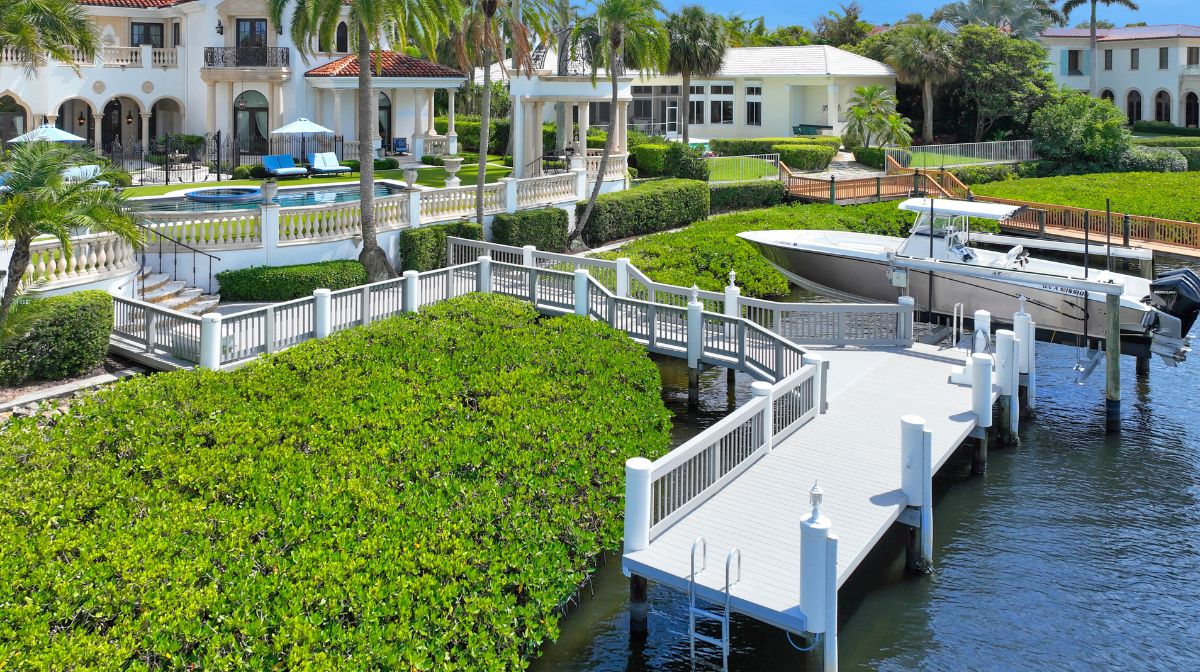
Because docks sit on state-owned submerged land, building one means working within a regulatory framework as well as within your riparian area. Two rules tend to matter most to buyers.
First, there is a setback. As a general rule, docks and similar structures must sit at least 25 feet from the riparian line shared with each neighbor, with a smaller 10-foot setback for marginal docks running parallel to a seawall. There are meaningful exceptions: properties with less than 65 feet of shoreline frontage are generally relieved of the standard setback, and a neighbor can waive it by signing a letter of concurrence. On a narrow lot, the setbacks alone can shape what kind of dock is even possible.
Views, Neighbors, and Acting in Time
The right to a view is one of the more emotionally charged riparian rights and one of the most commonly disputed. Florida protects an owner’s right to an unobstructed view, but not without limit. Courts distinguish a genuine, material obstruction of the view to the channel from a partial blocking or a mere annoyance. A structure that substantially blocks the view may be actionable, while one that only clips a distant sightline usually is not.
Courts are cautious about ordering a neighbor’s structure torn down however, since that is a drastic remedy granted sparingly, so sightlines and a neighbor’s dock potential are better handled as due diligence before buying than as a fight afterward.
When Non-Waterfront Owners Have Water Rights Too

Riparian rights are not limited to homes that sit directly on the water. In many South Florida communities, developers reserved water access for interior lots through recorded easements, creating the deeded dock slips, community docks, and shared access points found throughout the region. Through those easements, an owner whose home does not touch the water can still hold a meaningful right to reach and use it.
A general easement for ingress and egress typically carries the practical rights needed to use it, such as crossing to the water and in some cases applying to build a dock, but it does not automatically include everything a direct waterfront owner enjoys. For a buyer considering a home with shared or deeded water access, reading the actual easement and association documents is essential, because the value of that access lives in the details.
What This Means When You’re Buying
These pieces add up to a short checklist. Confirm the rights actually attach and are not encumbered, which usually means reviewing the deed and chain of title and ordering a survey that shows the riparian lines, not just the upland lot lines. If boating is central to the decision, confirm what is actually permittable for a dock given the setbacks and shape of the riparian area before assuming the existing dock can be enlarged or relocated. And in any community with shared docks or deeded access, read the easement and association rules rather than relying on a listing’s shorthand.
Start With the Right Local Perspective
The homes that make the most of the water are not always the ones that look best in photos. They are the ones where the rights, the riparian lines, the dock potential, and the access line up with how a buyer actually intends to use the water.
Waterfront Properties has spent decades helping buyers navigate the distinct waterways and communities of Palm Beach, Martin, and St. Lucie counties, from deepwater canals and Intracoastal frontage to riverfront streets, oceanfront estates, and communities built around shared water access. If you are beginning a serious waterfront search and want to understand what a given property truly conveys, click here to get in touch or schedule an appointment.
Frequently Asked Questions
What are riparian rights in Florida?
Riparian rights are the legal rights that come with owning land that borders navigable water. In plain terms, they are the rights to reach the water, use it, and benefit from being next to it. They are often the single most valuable thing a waterfront property conveys, and they exist because waterfront is limited and valuable, so Florida law has spent more than a century balancing private waterfront use against the public’s interest in the water itself.
What is the difference between riparian and littoral rights?
Strictly speaking, riparian rights belong to land along rivers and streams, while littoral rights belong to land along oceans and lakes. In South Florida, a home on the St. Lucie River or the Loxahatchee would be a riparian property, while an oceanfront home on the Atlantic would be a littoral one. In everyday conversation, and in most listings, deeds, and court cases, the word “riparian” is used as a catch-all for both.
Do riparian rights transfer when you buy a waterfront property?
Yes. Under Florida law they are appurtenant to the property, meaning they belong to the land and transfer automatically when it is sold, whether or not the deed specifically mentions them. To carry these rights, the property has to extend to the ordinary high water mark of a body of water that is legally navigable. That is not automatic in every case, which is why a survey and a look at the chain of title matter before closing.
Do you own the land under the water on a waterfront property?
No. The submerged bottom below the high water mark is not yours. In Florida, the state holds title to those sovereign submerged lands in trust for the public, under what is known as the public trust doctrine. This is why courts describe riparian rights as qualified rather than absolute: your rights are real and protected, but they are exercised alongside the public’s interest and your neighbors’.
What rights do riparian rights include?
They are a small bundle of related privileges. The most protected is the right of access, getting to and from the water without being blocked. Closely tied to it is the right to build a dock or pier out to navigable water, called the right to “wharf out.” Florida also recognizes a right to an unobstructed view over the water, protected within limits, and a right to accretion and reliction, where land that gradually builds up or is exposed generally becomes the owner’s. Waterfront owners also share in the public’s rights to navigation, boating, fishing, and swimming.
Can you build a dock, and what are the setback rules?
Riparian rights include the right to build a dock out to navigable water, but because docks sit on state-owned submerged land, building one means working within a permitting framework. As a general rule, docks must sit at least 25 feet from the riparian line shared with each neighbor, with a smaller 10-foot setback for marginal docks running parallel to a seawall. Properties with less than 65 feet of shoreline frontage are generally relieved of the standard setback, and a neighbor can waive it by signing a letter of concurrence. On a narrow lot, the setbacks alone can shape what kind of dock is even possible.
Does your property line extend straight out into the water?
No. People often assume their two side property lines simply continue straight out to mark off a private slice of waterway, but it does not work that way. You do not own the submerged bottom, and your rights to use the water are shared with your neighbors rather than fixed to your lot lines. Florida courts have generally sorted out these boundaries through a principle of equitable apportionment, drawing riparian lines that angle toward the navigation channel so each owner gets fair access, so you cannot assume your usable water matches a straight extension of your lot lines.
Are you guaranteed a completely unobstructed view of the water?
No. Florida protects an owner’s right to a view, but not without limit. Courts distinguish a genuine, material obstruction of the view to the channel from a partial blocking or a mere annoyance. A structure that substantially blocks the view may be actionable, while one that only clips a distant sightline usually is not. Your right is to a reasonable view and reasonable access, not a perfectly unobstructed one, and courts are cautious about ordering a neighbor’s structure torn down.
Can non-waterfront owners have water access rights?
Yes. In many South Florida communities, developers reserved water access for interior lots through recorded easements, creating the deeded dock slips, community docks, and shared access points found throughout the region. Through those easements, an owner whose home does not touch the water can still hold a meaningful right to reach and use it. What the easement includes depends on its wording, so reading the actual easement and association documents is essential.
What should you check before buying a waterfront home?
Confirm the rights actually attach and are not encumbered, which usually means reviewing the deed and chain of title and ordering a survey that shows the riparian lines, not just the upland lot lines. If boating is central to the decision, confirm what is actually permittable for a dock given the setbacks and the shape of the riparian area before assuming an existing dock can be enlarged or relocated. And in any community with shared docks or deeded access, read the easement and association rules rather than relying on a listing’s shorthand.
Leave A Comment