

Communities Where a Walking Lifestyle Actually Works in the Northern Palm Beaches

One of the more common questions on a first showing tour has nothing to do with square footage, ceiling height, or dock depth. It comes out somewhere between the second and third house, usually in the car: can I walk to anything from here?
It tends to come from buyers who spent years somewhere that walking was ordinary. They walked to the corner market in Chicago, to the train in Westchester, to dinner three blocks away in Boston. Most of them assume Florida means giving that up, and in much of Palm Beach County they are correct. The area was built around the car. Two destinations that look close on a map are often separated by a six-lane road, a drainage canal, a wall, or a gate.
There are exceptions, though, and they are specific enough to name. In the northern Palm Beaches, a handful of communities were either planned for walking or grew small enough that walking stayed practical. Knowing which ones, and which streets inside them, saves buyers a season of frustration.
Three Different Things Buyers Mean by Walkable
When a buyer says they want to walk, they usually mean one of three things, and each one leads to a different set of addresses.
The first is walking to a town center. Coffee in the morning, dinner on a Friday, a pharmacy, a haircut, somewhere to run into people. This requires commercial space close to housing, which in this county almost always means the community was planned that way from the start.
The second is walking to water. For a large share of buyers here, the only walk they care about is the one to the beach or along the Intracoastal. Retail is optional. What matters is the distance, the crossing, and whether the path exists.
The third is walking inside the neighborhood. Sidewalk loops, shaded streets, a lake to circle, a route for the dog and a route for the morning. Many communities do this beautifully and still offer nothing at all within walking distance of the front gate.
Listings blur all three together under one word. Buyers who sort out which one they actually want tend to end up much happier with where they land.
Abacoa: Planned for It From the Beginning
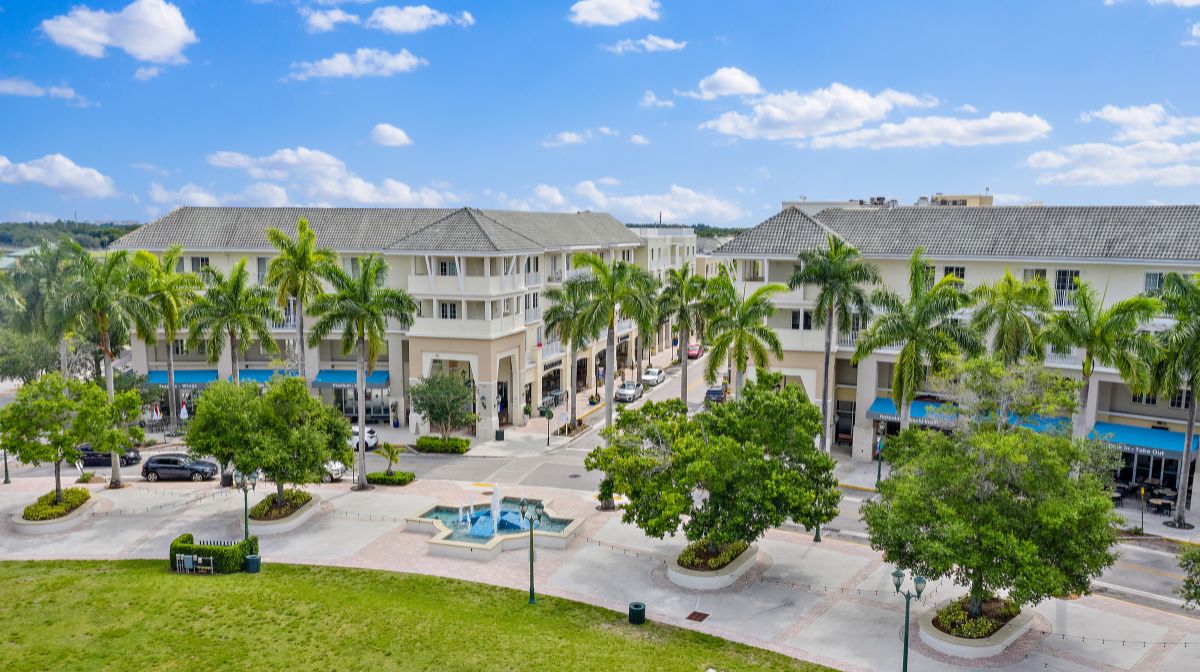
Abacoa in Jupiter is the most deliberate answer to this question in the northern Palm Beaches. The Town of Jupiter describes it as a 2,055-acre master-planned mixed-use community built around the principles of Traditional Neighborhood Development, which in practice means narrower streets, front porches, garages pushed to the rear, and a commercial core placed inside the community instead of out on a highway.
That core is Downtown Abacoa, roughly 91,000 square feet of main-street-style retail with restaurants, a coffee roaster, a brewery, a pharmacy, salons, and professional offices. Roger Dean Chevrolet Stadium sits within the community and hosts spring training for the St. Louis Cardinals and Miami Marlins, then the Jupiter Hammerheads and Palm Beach Cardinals from April through September. A Florida Atlantic University campus, the Max Planck Florida Institute, and the research campus nearby put daily foot traffic into the area year-round. Greenway paths and sidewalks connect most of the residential neighborhoods to all of it.
Abacoa is a collection of separate neighborhoods, though, and walkability varies considerably across them. Homes in the neighborhoods immediately around the town center and the stadium reach dinner in a few minutes on foot. Homes on the outer edges, across Frederick Small or Central Blvd, are a bike ride or a drive from the same destinations. Abacoa is also inland, so buyers who define walking as walking to water should look elsewhere.
The Riverwalk Corridor in Jupiter
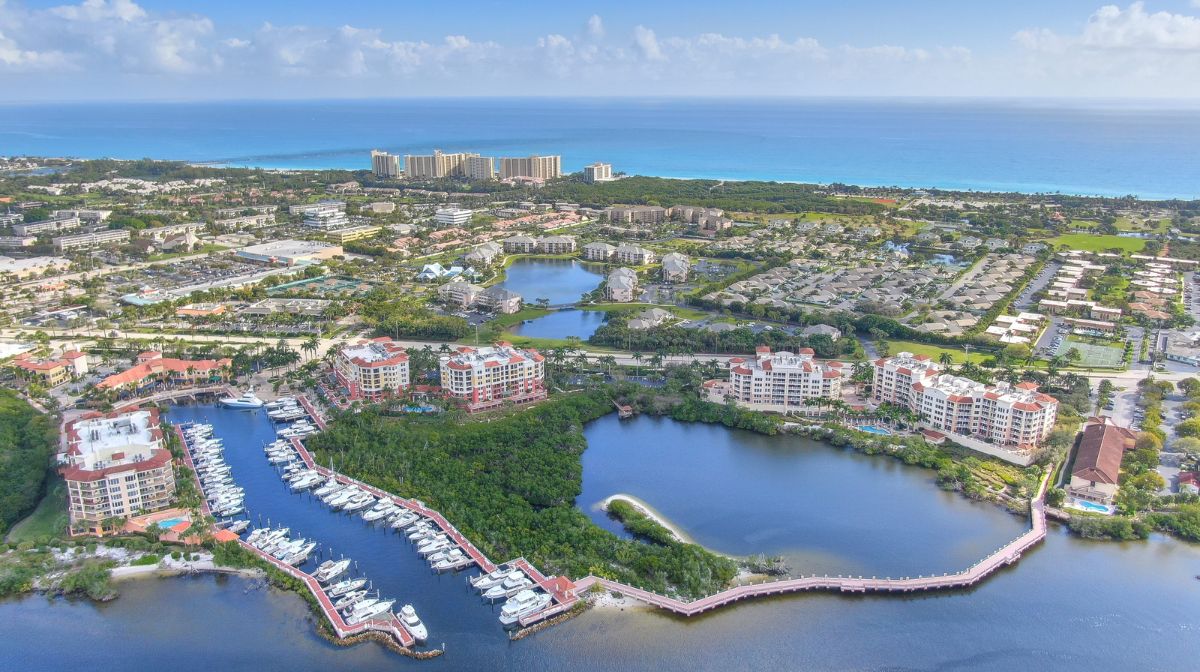
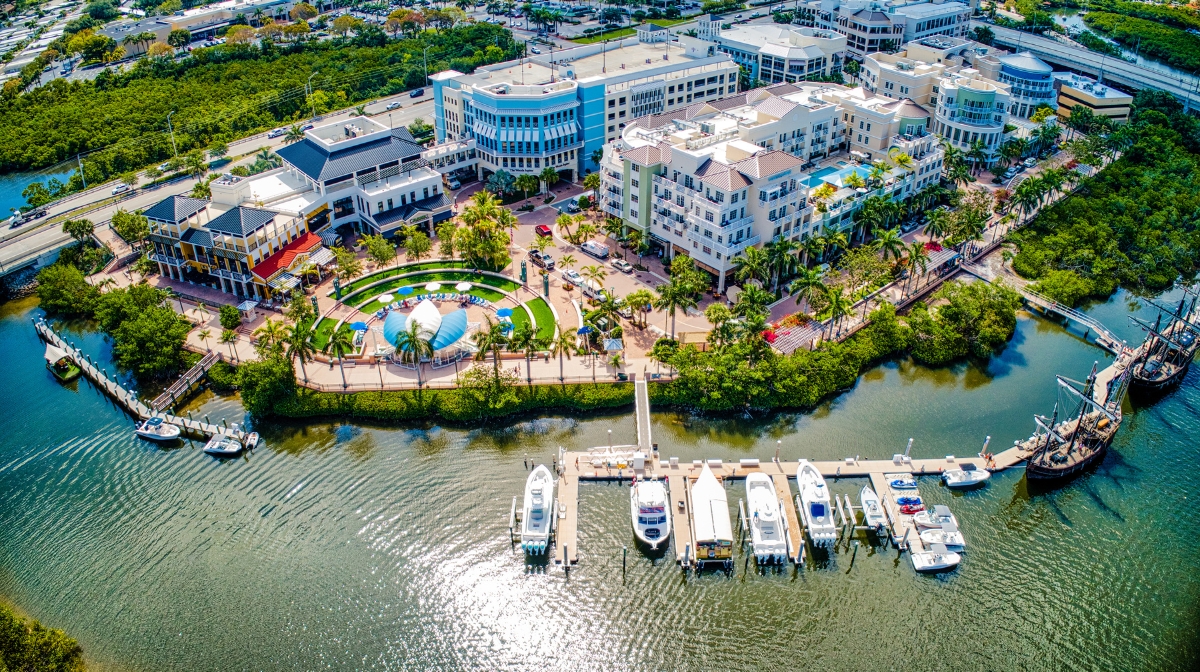
Jupiter has been quietly assembling a pedestrian spine along the eastern shore of the Intracoastal for more than fifteen years. The Riverwalk now runs more than two miles of a planned two and a half, linking Jupiter Ridge Natural Area, Mangrove Bay, a lagoon footbridge, the Jupiter Yacht Club, and Harbourside Place. The U.S. 1 bridge reopened in April 2025 with sidewalks and dedicated bike lanes in each direction, which closed a long-standing gap for anyone traveling the corridor on foot.
For buyers, this means the condominiums and townhomes along that stretch of the Intracoastal come with something rare in South Florida: a continuous waterfront path that leads to restaurants, a hotel, an amphitheater, and a marina. The range is broader than the Harbourside development alone. Where the Riverwalk passes the Jupiter Yacht Club marina, residents can walk to Dive Bar for sushi and seafood on an open-air patio over the water and to Cafe des Artistes, a French bistro tucked into the same marina, both of which give the corridor somewhere to go for dinner well before you reach Harbourside. North of there, the Inlet District area near the lighthouse offers its own cluster of waterfront restaurants reachable on foot from a limited number of addresses.
One caveat is worth knowing. The southern segments, between Jupiter Ridge and the yacht club, pass through natural and residential areas with no shops or restaurants along the way, so that portion is a walk for its own sake rather than a walk to anything.
Tequesta: Small Enough That It Works
Tequesta covers roughly 2.2 square miles, and that alone does a great deal of the work. When an entire village fits inside that footprint, distances stay short by default, and errands that would require a car in a larger town stay within reach on foot. The village has kept its low profile in the literal sense as well, with no high-rises and little sprawl, so the streets stay human-scaled rather than built around moving traffic through them.
The village center along Tequesta Drive, Cypress Drive, Bridge Road, and Old Dixie Highway holds coffee shops, locally owned restaurants, the Lighthouse ArtCenter, boutiques, and a farmers market, all within a few blocks of each other. Residents of the neighborhoods immediately around that core genuinely walk to breakfast, and the short distances let a coffee run, a stop at a shop, and the walk home add up to a single outing rather than three separate drives.
Where Abacoa and Alton built their walkable cores as single developed retail centers, Tequesta's spreads across a few connected streets as a collection of small businesses, which gives it a more incidental, small-town texture. The trade-off is that the benefit is concentrated. Homes in the pockets nearest the center get the most out of it, while those toward the edges of the village lean more on the car for everyday needs. For buyers drawn to Tequesta, the useful thing to pin down early is how many of the places they would actually visit in a normal week fall within a comfortable walk of the specific home.
Juno Beach: Walking to the Water
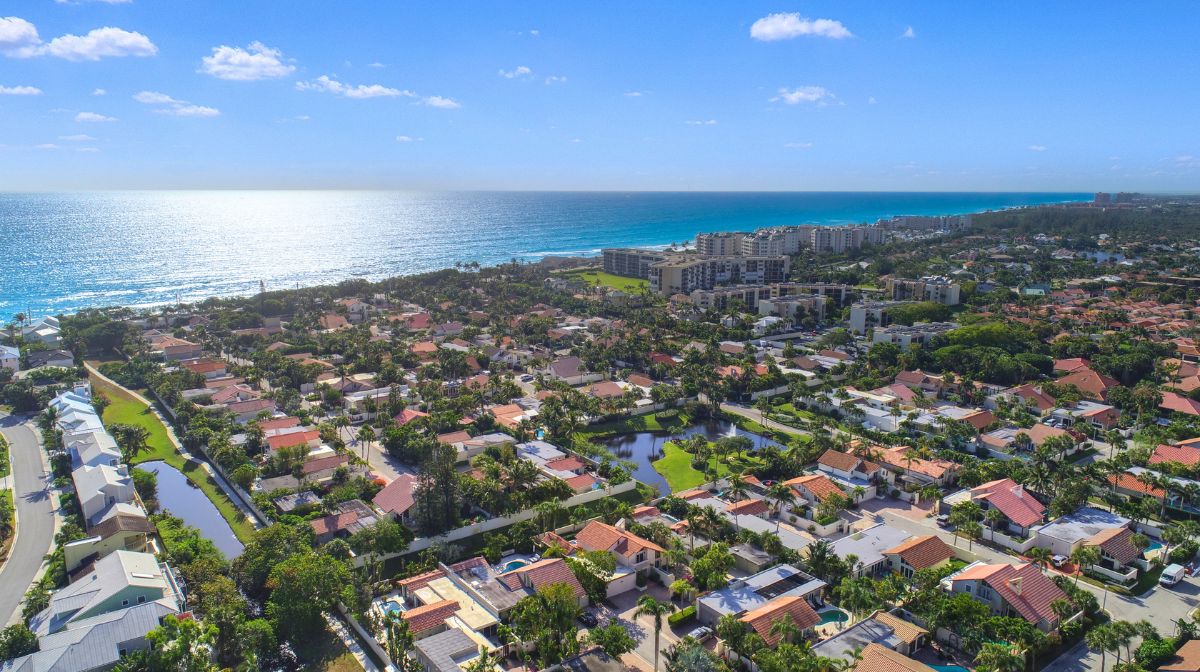
Juno Beach is about two square miles of coastline between the ocean and the Intracoastal, and it serves the second definition of walkability better than almost anywhere else in the county. Oceanfront and near-ocean condominiums put the sand a few minutes from the door. The Juno Beach Pier, Loggerhead Park, the Loggerhead Marinelife Center, Pelican Lake, and the Juno Dunes Natural Area are all clustered within the same small footprint, and Ocean Drive functions as the town spine for walking and biking.
A cluster of restaurants, shops, and everyday services near U.S. Highway 1 and Donald Ross Road serves as the town commercial center. Whether that is walkable from a given home depends almost entirely on which side of U.S. 1 the home sits on. Crossing a highway on foot in August changes the character of an errand, and buyers who plan to walk for groceries rather than for sunrise should test that specific crossing before they commit.
Alton in Palm Beach Gardens
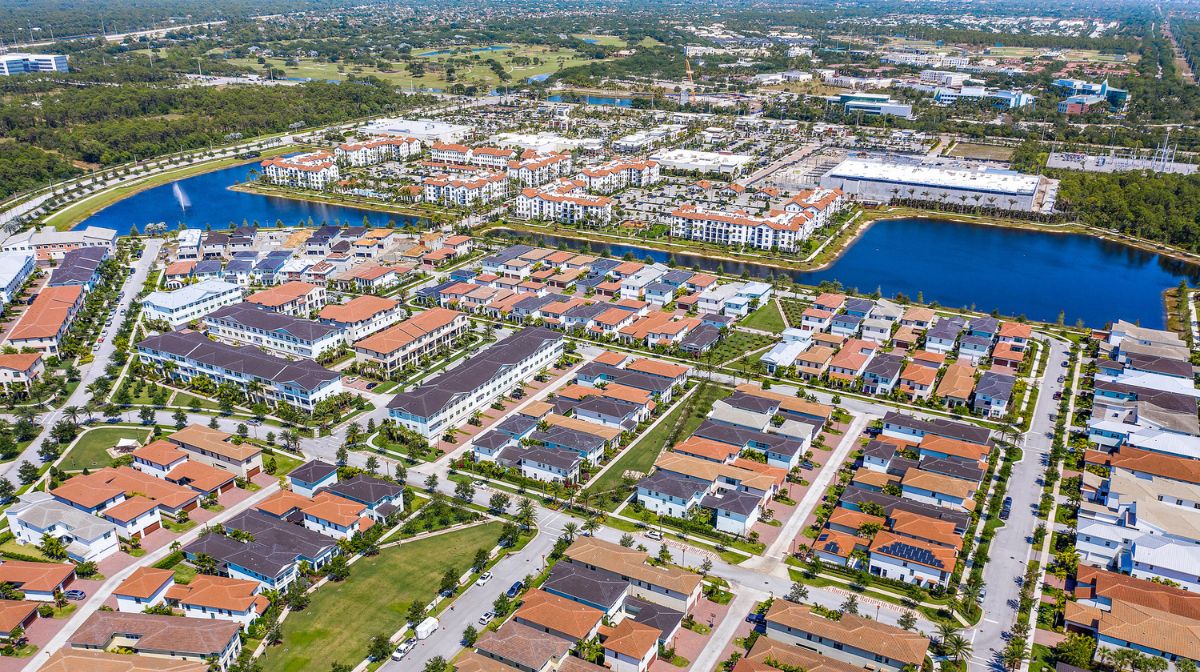
Alton is the newest large-scale attempt at this in the area, and it took the Abacoa approach of putting the commercial center inside the community. Alton Town Center sits on Donald Ross Road east of Interstate 95 and holds more than thirty businesses, anchored by a full-service Publix, Home Depot and fitness club, with restaurants, coffee, medical offices, a pharmacy, and everyday services. Sidewalks and internal paths connect the residential neighborhoods to it.
The honest characterization is that Alton Town Center is a large open-air retail center with big-box anchors, closer in feel to a well-designed shopping district than to a historic main street. It also spreads across enough ground that the walk from a home on the far side of Alton is a real walk, not a stroll. Buyers who care about this should measure the route from the specific address to the Publix rather than trusting the community-level description.
What Looks Walkable Online and Is Not
Gated golf communities frequently score well on walkability tools because they have extensive sidewalk networks and lovely internal loops. Those loops rarely lead outside the gate, and the gate itself is often a mile from anything commercial. Buyers who want the third kind of walkability will be delighted; buyers who wanted the first will not.
The PGA Boulevard corridor in Palm Beach Gardens can be deceiving at first glance. The Gardens Mall, Downtown Palm Beach Gardens, Legacy Place, and PGA Commons sit relatively close together and are pleasant to walk around once you arrive, but they are separated from each other and from most housing by wide roads and large parking fields. While technically you can walk from residential areas to commercial, you probably wouldn’t want to.
Finally, there is the golf cart question. In several of these communities, a low-speed vehicle covers the trips that are slightly too far to walk comfortably, and the rules governing that differ meaningfully from one municipality to the next. It is a separate conversation from walking, and one worth having before assuming a cart solves the gap.
The Bottom Line
Walkability in the northern Palm Beaches is a street-by-street question rather than a city-by-city one. Two homes in the same community, a quarter mile apart, can produce completely different daily routines. The communities above are where it works, but even within them the specific address determines whether the promise holds up.
Waterfront Properties has been working in Jupiter, Tequesta, Juno Beach, and Palm Beach Gardens for decades, and we know which streets deliver on this and which ones only look like they do. If mornings on foot are part of what you are moving here for, we can help you narrow the search to the addresses that actually support the way you want to live.
To get in touch or schedule an appointment, click here.
Frequently Asked Questions
Which communities in the northern Palm Beaches are the most walkable?
The communities where a walking lifestyle genuinely works are Abacoa in Jupiter, the Riverwalk corridor along the Intracoastal in Jupiter, the village of Tequesta, Juno Beach, and Alton in Palm Beach Gardens. Even within these, walkability is a street-by-street question, so the specific address determines whether the promise holds up.
What makes Abacoa walkable?
Abacoa is a 2,055-acre master-planned mixed-use community built around the principles of Traditional Neighborhood Development, which means narrower streets, front porches, garages at the rear, and a commercial core placed inside the community rather than out on a highway. That core is Downtown Abacoa, roughly 91,000 square feet of main-street-style retail with restaurants, a coffee roaster, a brewery, a pharmacy, salons, and offices, with greenway paths and sidewalks connecting most neighborhoods to it. Homes near the town center and the stadium can reach dinner in a few minutes on foot, while homes on the outer edges are a bike ride or a drive away. Abacoa is inland, so it does not serve buyers who want to walk to the water.
How long is the Jupiter Riverwalk and what does it connect?
The Riverwalk runs more than two miles of a planned two and a half along the eastern shore of the Intracoastal, linking Jupiter Ridge Natural Area, Mangrove Bay, a lagoon footbridge, the Jupiter Yacht Club, and Harbourside Place. The southern segments between Jupiter Ridge and the yacht club pass through natural areas with no shops or restaurants along the way.
What restaurants can you walk to along the Jupiter Riverwalk?
Where the Riverwalk passes the Jupiter Yacht Club marina, residents can walk to Dive Bar for sushi and seafood on an open-air patio over the water and to Cafe des Artistes, a French bistro tucked into the same marina. Both give the corridor somewhere to go for dinner well before you reach Harbourside Place. North of there, the Inlet District near the lighthouse offers its own cluster of waterfront restaurants reachable on foot from a limited number of addresses.
Is Tequesta walkable?
Tequesta covers roughly 2.2 square miles, and its small size does much of the work. The village center along Tequesta Drive, Cypress Drive, Bridge Road, and Old Dixie Highway holds coffee shops, locally owned restaurants, the Lighthouse ArtCenter, boutiques, and a farmers market within a few blocks of each other, and residents of the neighborhoods immediately around that core genuinely walk to breakfast.
Is Juno Beach a walkable town?
Juno Beach is about two square miles of coastline between the ocean and the Intracoastal, and it serves walking to the water better than almost anywhere else in the county. Oceanfront and near-ocean condominiums put the sand a few minutes from the door, and the Juno Beach Pier, Loggerhead Park, the Loggerhead Marinelife Center, Pelican Lake, and the Juno Dunes Natural Area are clustered within the same small footprint, with Ocean Drive serving as the spine for walking and biking. Whether the commercial center near U.S. Highway 1 and Donald Ross Road is walkable depends almost entirely on which side of U.S. 1 the home sits on.
What is Alton Town Center?
Alton Town Center sits on Donald Ross Road east of Interstate 95 and holds more than thirty businesses, anchored by a full-service Publix and a fitness club, with restaurants, coffee, medical offices, a pharmacy, and everyday services, connected to the residential neighborhoods by sidewalks and internal paths. It is a large open-air retail center with big-box anchors, closer in feel to a well-designed shopping district than a historic main street, and it spreads across enough ground that the walk from a home on the far side of Alton is a real walk rather than a stroll.
Can you walk between the shopping centers on PGA Boulevard in Palm Beach Gardens?
The PGA Boulevard corridor can be deceiving at first glance. The Gardens Mall, Downtown Palm Beach Gardens, Legacy Place, and PGA Commons sit relatively close together and are pleasant to walk around once you arrive, but they are separated from each other and from most housing by wide roads and large parking fields. While technically you can walk from residential areas to commercial, you probably would not want to.
Are gated golf communities walkable?
Gated golf communities frequently score well on walkability tools because they have extensive sidewalk networks and lovely internal loops. Those loops rarely lead outside the gate, though, and the gate itself is often a mile from anything commercial. They suit buyers who want to walk inside the neighborhood, but not buyers who want to walk to a town center.
Leave A Comment